In the run up to each exhibition we run Live and Learn workshops, one before we open and one in the opening week. These workshops are a social and creative opportunity for Fabrica volunteers and staff to come together to discuss and explore the themes of the exhibition, run by artist and facilitator Jane Fordham. Before we dive into the activity we have food and drinks together!
Our most recent workshops were an exploration of our current exhibition: At Home in the Water by Vanessa Daws. The sessions involved a mixture of creative writing in response to the sea, and the opportunity to get creative with seaweed, inks and printmaking techniques!
Studying Art History, Fine art and Modern History at BHASVIC, has changed my perception of art in its entirety, extending it past the old hobby it was, into something which I believe, has the power to significantly impact someone’s life for the better. This is a notion that has only been reinforced during my time volunteering at Fabrica.
After hearing about the opportunity from my art teacher, Alex, I initially applied in hopes of both getting to know the contemporary art scene in Brighton a bit better and to gain some useful work experience to add to my university application. Whilst it has undoubtedly aided in both of those goals, I think it’s really the community that Fabrica has fostered, which has been the thing I’ve taken away most from the experience. The amazing scope of events is something I was completely unaware of prior to coming to volunteer here, but is a fundamental aspect of the gallery which anyone, artistically inclined or not, has the opportunity to get stuck into.
The inclusive, friendly and creative nature of both the volunteers and the people visiting makes Fabrica an incredibly inviting place to find yourself in and I’ve especially enjoyed interacting with the abundance families who attended our last exhibition – the comments the children wrote in our review book were particularly entertaining (and I’d recommend having a flic through it next time you pass by).
I am currently in my second year of college studying English, Art and Art History for A Level After college I hope to attend University and study History of Art with the hopeful end goal of finding a career somewhere within the field of restoration or curation. I really enjoy making my own art and consider it alongside reading as one of my favourite hobbies, working at Fabrica was great for both of these as it gave me heaps of inspiration for my art as well as new areas of art history to read up on.
I first heard about the possibility of volunteering at Fabrica through my art teacher at college. He recommended it as an opportunity to find some work experience in a relevant field as well as a way to get involved in the local art scene. When I joined the volunteer team at Fabrica I was looking to gain a little more experience in the workplace and some insight into a field which I hope to join.
Though more importantly I hoped to share my interest in art with others and engage in conversation in an environment of equally passionate people.
About Fabrica I would describe Fabrica as creative, collaborative and community-driven
I actually attended primary school just around the way from Fabrica so in my mind I will always think of it as a place for curiosity and discovery because that’s what it was to me when I was younger, this kind of magical place which me and my brother could explore and play in.
One of my favourite parts of volunteering at Fabrica was having an opportunity to contribute to our exhibitions run of the Response magazine. It was so amazing working with other volunteers and staff to create a piece of work that visitors were able to use to further their understanding of and engagement with the exhibition. It gave me a much greater understanding of the steps taken to get a project from the initial conceptual stages to a finished product and the conversations and ideas we got to explore as a team are something I’m so glad I got to have been a part of. I think the most enjoyable aspect of volunteering for me was greeting people at the front desk. Though at times it can be a little stressful trying to make sure you’ve briefed each visitor, it was an overall rewarding experience to make sure everyone knew they were welcome at Fabrica and it let me see firsthand people engage with art work in countless different ways. I also found it to be another great opportunity to discuss with people a topic I’m passionate about. I like to think that I maybe contributed just a little to people’s enjoyment of the exhibition.
I think aside from all the technical and workplace skills that Fabrica has helped me with, my most significant take away from this experience has been the real life connections I was able to build during my time volunteering. Through Fabrica I’ve been able to meet so many interesting and like minded people who have really inspired me to get involved with my local artistic scene.
I am really proud that I’ve had the chance to be a part of Fabrica!
Ahead of our current exhibition, At Home in the Water by Vanessa Daws, the volunteer team had the pleasure of visiting a few exhibitions in London which explored discreetly similar themes.
After a cosy morning train ride, the group made their way to The Wellcome Collection for In The Air. Showcasing a variety of artists, scientists and makers, the exhibit questioned whether or not we all truly ‘breathe the same air’.
The exhibition drew attention to the ways in which our collective relationship with the air has inherently changed since the pandemic. In thinking about not only the socioeconomic, but environmental factors which affect our air, we were drawn to think about the inextricable relationship between the air and the sea; an important element of At Home in the Water.
Did you know that between 50-80% of the world’s oxygen comes from the sea?
We also looked around Wellcome Trust’s permanent collection, which features a host of items all relating to the history of public health. We were then confronted with questions to do with the human body. Mercedes Gleitze, the early 20th Century swimmer who also features in At Home in the Water, swam for reasons to do with endurance, but also for its wonderfully euphoric effect on the body. Cold water swimming is famous for its health benefits, and became something of a ‘craze’ in pandemic and post-pandemic Britain.
After lunch, we went to Somerset House to visit a few open studios, and see Grada Kilomba’s, O Barco / The Boat.
Grada Kilomba’s, O Barco / The Boat
Situated in the Somerset Courtyard is a striking 140 of charred wooden blocks composing the ‘lower ‘hold’ of an historical European slave ship’. The blocks are hand-inscribed with a poem written in six different languages.
While the sea is often viewed as a symbol of freedom, O Barco / The Boat encouraged us to consider the fraught history of maritime colonisation. The installation is currently on tour; we encourage those who are able to seek it out.
‘What stories are told? Where are they told? How are they told? And by who are they told?’
We then visited a few unique galleries within the house. First, GALLERY 31: SWIMMERS LIMB, curated by Taylor Lemelle, featured a series of abstract art which, we realised, was not exactly related to swimming. In fact, the theme of the exhibit was that it had no theme. But we enjoyed it nonetheless!
We ended our excursion with the atmospheric We Can No Longer Deny Ourselves by SERAFINE1369. The installation was situated around the theme of how we experience time.
Featuring footage of artist Vanessa Daws’s hours-long endurance swim, At Home in the Water also begs us to consider how we measure time in moments which call for heightened endurance and perseverance.
After seeing so much in a day, we returned to Brighton anticipating Fabrica’s new exhibition even more than before. We were thrilled to have broadened our minds to the ways in which we can think about sea swimming, endurance and the arts, and relate them to our own individual experiences.
Our Fabrica volunteer celebrations consisted of three events on the same day, by Fabrica volunteers and for Fabrica volunteers
Yoga Session at Fabrica – run by volunteer Savita Burke
A special relaxing yoga session, accessible for all abilities and levels.
All the volunteers who took part felt refreshed, relaxed and well stretched and Katherine commented “With gently powerful, deep, slow stretching and breathing exercises, Savita’s yoga class has a meditative quality about it. I felt calm and grounded for the rest of the day.”
Volunteer Tea Party
We had a delicious tea party with cake, fruits, sausage rolls. One of our volunteers brought in homemade cornflake clusters which went down a treat. We also played some games which included “Obama Llama”!
Artist Talk – Christopher McHugh organised by Jo a volunteer
A talk with slides from artist Christopher McHugh. Christopher also has a great connection to Fabrica, in that he was one of the founding members.
Christopher McHugh has considered himself a painter although, over the years, he has also made work in a range of other media and contexts. He trained in painting at Stafford College of Art, Bath Academy of Art and Manchester Polytechnic (now Manchester School of Art within Manchester Metropolitan University) and studied later at The University of Sussex. He has taught Fine Art at degree and postgraduate level for more than 20 years. Themes in his painting have varied but have always been interested in the relationship between medium, materiality and ‘reading’.
Colour seems to figure largely as a sort of language unto itself and as a metaphor or model for a complex range of sensations and ideas. A series of what he refers to as ‘pictorial memes’ have shaped the appearance of his paintings into different but related families such as The Wide Horizon and Arboreality, taking recognizable visual features as a mutable vehicle for references to experience and art …. and questions about representation and meaning.
One of our volunteers Barbara reflects on Chris’ talk at Fabrica:
“I first met Chris McHugh 40 years ago! I had just finished my degree in Fine Art and moved to Brighton from London. I enrolled in a couple of courses at Sussex University and was absolutely delighted upon discovering Chris. What a wonderful, relaxed tutor he was; His vast knowledge of art from the Expressionists to Modern times was stunning and his enthusiasm and erudition spurred me on to take more courses with him and around various galleries where he gave talks. Chris was/is a very remarkable and stimulating teacher. I was mischievous then, and always asked the most difficult questions and made the most annoying remarks! I last saw him at the Opening of Fabrica just before I embarked on my new job in various places round the world but never forgot his attitude to teaching and his passion for painting. I shall always be grateful for his influence on me and the pleasure I got when he actually remembered me after all these years.”
Others commented “his talk and his paintings were absolutely riveting.”
Fabrica’s Spring exhibition 2022 brought together a series of artworks by Mohamad Hafez. Hafez’s ‘Journeys from an Absent Present to a Lost Past’ encouraged our volunteer group, ACTIVATE, to ask themselves “what holds the essence of home for you?” Together we compiled our own stories, photographs and films in order to identify a commonality and connection with others, situating ourselves within the global community.
Listen to our group’s ideas and reflections via Soundcloud
Reflections and observations made by our volunteers:
Colette: “I feel that many elements to the project and we seem to have really developed and become more collaborative and cohesive in our discussions about where we are and where we want to go to and I think that is a consequence of us working so closely together discussing things.”
Vicky: “I enjoyed seeing the work coming together, the united effort that concluded in the collection of interviews. I really liked the result a collection of informal non-sterile, living contributions by visitors, volunteers and staff.”
Jenny: “The thing I enjoyed the most was the engagement with the public, which came as a surprise to me. It was a privilege to hear their stories and a wide range of views. I enjoyed watching the videos back editing on Instagram and watching the project grow.”
Photographer William Morgan has recently joined our Fabrica team this spring. He took some close-up pictures of the installation and artworks from our current exhibition “Journeys from an Absent Present to a Lost Past” by Syrian artist Mohamad Hafez. The exhibition is still running until the 29th of May.
Morgan graduated from University of South Wales with First Class Honours working in both commercial and fine art photography. His focus on architecture and environment building complements Hafez’s street scenes of his home city of Damascus as well as the gallery’s church architectural interior.
Credit: William H Morgan, @w.h.morg Credit: William H Morgan, @w.h.morg Credit: William H Morgan, @w.h.morg Credit: William H Morgan, @w.h.morg Credit: William H Morgan, @w.h.morg Credit: William H Morgan, @w.h.morg Credit: William H Morgan, @w.h.morg
A retrospective on our last volunteer trip visiting some of Brighton’s latest exhibitions.
On the 17th February, we took a day trip out with our wonderful volunteers to visit some of the latest exhibitions around Brighton. Donning our warmest hats and coats we braved the harsh elements, eager to see what the city had to offer. Here are a few highlights of the trip, featuring some of our volunteers.
A volunteer examining the Undercurrents exhibition at Phoenix Art Space
Our first stop was to Brighton’s CCA (Centre for Contemporary Arts) at the Grand Parade. Their latest body of work on display entitled; ‘Today’s gift is tomorrow’s commodity. Yesterday’s commodity is tomorrow’s found art object. Today’s art object is tomorrow’s junk. And yesterday’s junk is tomorrow’s heirloom’ has been curated by Lloyd Corporation following a sustained period of research over the last 18 months. Drawing on the history of the barrel as a unit of measurement and symbol of trade – as an initial starting point – the exhibition brings together two installations.
The first, as you walk into the gallery space, is a darkened room illuminated by photographic slides from three projectors. Each collection shows looping series of various signs, adverts and notices from the streets, all photographed by the artists across multiple cities around Europe. Together they act to serve as a reference to both the site of the exhibition and the locations in which the artists found themselves separated during lockdown. As we continued through the exhibition, we stepped into the North Gallery space where we found five shipping crates; each filled with various goods collected by the artists from auctions, abandoned storage units, internet sites, junk shops and street finds.
North Gallery Space, CCA
After some quick lunch, we moved on to our next exhibition at ONCA Gallery. Coinciding with LGBTQ+ History month, their latest exhibition by Brighton-based photographer and researcher Olga Saavedra Montes de Oca (AKA Olisam) documents and explores the experiences of the Cuban Trans-community. Entitled ‘The Family as a Space for Gender Transition‘, the body of work centers on transgender individuals in relation to their families and invites the audience to re-examine and bear witness to a particular way of experiencing gender within a hetero-normative family setting.
As we stepped into the gallery we were warmly greeted at the front desk by Peanut the Pug, ONCA’s very own ‘guard’ dog. Looking around the gallery space we were immediately drawn in by the striking imagery on display. Through the combination of powerful portrait photography and video installations, the exhibition creatively constructs an intimate domestic setting, reminiscent to that of the subjects. All of which is emphasised through the use of small interior details such as a hanging washing line, emerald green velvet curtains and even an toilet with a built in sound installation.
ONCAA volunteer admires a piece of work at ONCA
Following on from ONCA, our next stop was to Phoenix Art Space where we grabbed a quick coffee before checking out their latest exhibit, ‘Undercurrents‘. Curated by Louise McCurdy and Steve Geliot the show investigates the wild secrets of Brighton’s starling murmurations, all of which is explored through the use of visceral experiences, physical evidence and multi-channel sound capture of both starlings and peregrines. Alongside this the exhibition featured an installation of starling nest boxes that were made from locally sourced wood in East Sussex and will be located around the city to create a starling colony once the exhibition finishes.
Volunteers having a discussion about work at Undercurrents Undercurrents, Phoenix
Rounding off the day, we decided to make our way back to the Brighton University and check out the latest collection of works at Edward Street campus. We visited Dorset Place, a tiny project space that hosts exciting projects by emerging artists. On show was ‘Action without Action‘ by artist, Joshua Le Galliene. Utilizing the limited space they had, Le Galliene explores the relationships between sound, space and invisible natural forces by filling the room with a number of bespoke glass bells, each suspended in mid-air by a helium-filled balloon. We were even lucky enough to have a one on one discussion with the artist themselves which really helped give us further insight into the piece. Overall the exhibit was a mesmerizing body of work that left us intrigued for far longer than we would of expected.
Volunteers admiring the work at Dorset PlaceVolunteers admiring the work at Dorset Place
It was a really wonderful day and it was great to catch up with one another whilst discovering some great art. One of our volunteers shared their experience:
“We really enjoyed the Volunteer walk around Brighton Art Galleries yesterday – Informative and enlightening!”
Till then, we’ll be looking forward to our next volunteer trip!
A volunteer examining the Undercurrents exhibition at Phoenix Art Space
Jake is well known to our society, having demonstrated horse-racing recently. For further visual encounters of Jake’s art, please go to http://www.winkleart.com .
The watercolour workshop will be held in St. Andrews Church Centre, Church Lane, Ferring, BN12 5HN from 10 am – 4 pm, on street parking is available. Light refreshments will be served, a packed lunch is advisable.
We usually take photographs during the workshop of work and artists which are uploaded onto the A.A.S Face Book page. In order to do this, we require your written permission. Please email myself or Mark with your permission or not, thank you.
Charges for the workshop are £35.00 for A.A.S members or £40.00 for non-members. We will contact you nearer the workshop date with the payment details.
Jake has asked that you bring the following equipment: Your usual water colour paints/pencils, a minimum of 2 watercolour sheets of paper (min size 15 x 11 inches) stretched or taped to a board (Jake uses the make ‘Arches 140 lbs rough board’), a 2B and 2H pencil, rubber, sharpener, white base colour (e.g. white gouache) and a brush for gouache application.
Please do contact Yvonne if you are interested: y.roberts447@btinternet.com
A retrospective on our last volunteer trip to Folkestone
On the 26th October, we took a day trip out with some of our wonderful volunteers to visit the 2021 Creative Folkestone Triennial. Considering this time of year, the weather was lovely.
This year’s theme was The Plot – an exploration of the urban myths scattered around Folkestone’s centre. There were three routes, all based on the circulation of blood around the body. Here are few highlights of the trip, featuring our wonderful volunteers.
Volunteers enjoying Morag Myerscough’s Flock of Seagulls Bag of Stolen Chips
One of the first piece’s we saw was the large pop-up platform set in the city’s former gasworks site. This was such a great spark of colour to be greeted by in a late October day, as was the other pieces on site – including a large platform to dance on and a maze of poles to weave through.
Shezad Dawood’s The Terrarium
As we walked around we saw a great number of Gilbert & George’s punchy prints and Patrick Corillon’s relic boxes, as well as an virtual reality art piece. We were invited to place some VR goggles on and step into a sci-fi dystopia game. Set 300 years in the future, you play a hybrid creature exploring an underwater planet Earth and are offered an ethical dilemma ending.
Speaking into Marc Schmitz and Dolgor Ser-Od’s Siren
After some well needed fish and chips, we visited Siren not initially knowing it to be apart of the previous year’s triennial. The large horn caught our eye in the distance and we took a lovely detour stroll up a costal cliff to it. We had fun talking into in, and producing an echo that could be heard from anyone standing in front.
On our way back on route, we visited the Janus head, which had created a bit of local myth-making. This piece is based on the Ancient Roman god that guards the Roman underworld. Representing transitions between past and future, the piece is intentional facing out towards mainland Europe and England, and Folkestone’s role as a historic fort and port. However, this is not the only link to the past. The chalk Janus head intentionally, slowly disintegrated over the course of the exhibition, like the coastline cliff themselves, to reveal a smaller Janus head made of precious metals underneath. With its small reveal, it only took a few days before the chalk head was smashed open and its metal core was stolen – feeding into the town’s past reputation as a smuggler’s home. Although it was luckily recovered, this interaction between local residents just added even more layers into the piece through this enacting of modern mythmaking.
Petra examining the ruined remains of Pilar Quinteros’ Janus Fortress: Folkestone.
My personal highlight of the trip was genuinefake’s FORTUNE HERE. Set on Folkestone’s beach, the piece was set as a pop-up tent imitating old school funfairs, with fortune-tellers and rigged arcades. It’s educational message that documented the gentrification issues faced in Folkestone was incredibly informative and interactive. Even the mini-golf landscapes showed the local areas and told of the history of there pushing out of locals.
A volunteer playing mini-golf installation from genuinefake’s FORTUNE HERE (for Urban Room Folkestone)
We rounded off the trip we a beachside walk to On the Circulation of Blood, an audio-sculptural piece by Sam Belinfante in an amphitheatre, before walking up Zig Zag Path – where I’d just previously been trying to put a mini-ball up an impossibly steep mini-goal game!
It was a really wonderful day, and we were blessed with a lovely spot of sun in an otherwise dreary October. Our volunteers also had a few great comments on the trip:
“It was a really enjoyable and stimulating day and all my lovely fellow volunteers made it even more special. I appreciated it all the more for having had a pretty quiet time of it lately.”
“Thank you so much for all the effort you put into making the volunteer day trip to the Folkestone Triennial. Such a great shared experience”
Till then, we’ll be looking forward to our next volunteer trip!
This August artist and Fabrica volunteer Lucy Mitchell has been raising funds for our exhibitions and community programme through the sale of these stunning lightboxes, taking some inspiration from the beautiful stained glass windows at Fabrica. 5% of all sales go to Fabrica. You can support Lucy (and Fabrica!) here: etsy.com/uk/shop/Punkernalia
Lucy says: “I am delighted to be involved in the volunteer community fundraising for Fabrica. My connection with Fabrica and it’s genuine inclusive ethos has enabled me to be involved in all sorts of projects. I have enjoyed the diverse range of exhibitions, activities and events shown at Fabrica and met amazing volunteers and staff who share a sense of community and love of creativity”
‘Kiosk’ is a sculptural work by German artist Wolfgang Weileder. Exhibited at Fabrica gallery between 11 July – 29 August 2021. The piece integrates the materials of the Christian community with the iconography of the Islamic community.
‘ACTIVATE’ is a project that enables Fabrica volunteers to discuss, design and develop activities and interactions with the public during Fabrica exhibitions.
For this exhibition ‘ACTIVATE’ created a sound piece to further explore how these diverse cultures can interweave. These recordings, within architectural spaces and nature, result in a combined audio experience that aims to enable a greater understanding and appreciation of our differing views on spirituality.
The ‘ACTIVATE’ participants were Colette Mc Dowell, Jenny Rogers, Savita Burke and Vicky Waters. With thanks to Jane Fordham.
Details of recordings:
Savita enjoys traditional Sanskrit chanting and Bhajans, Gospel and Hebrew singing, Latin chants and instrumental music. Learning to sing and listening to sound has been her savior throughout Covid -19. She joined several online choirs and is now a recording artist of fundraising events in choirs. (Great British Home choir by Gareth Malone and Stay at Home Choir).
For the Kiosk project she selected chants and relaxation music from her collection of Yoga and Wellbeing CDs which she recorded a few years ago for Yoga, Relaxation and Meditation practitioners.
Jenny recorded outside an Anglican church in West Sussex using a Zoom H5 and an iPhone. She assembled and edited it into the finished piece after a discussion between the ‘ACTIVATE’ participants.
During a visit to Hatchlands Park, Vicky recorded a volunteer playing the organ in the music room.
Colette interviewed visitors to the exhibition starting with the question: “What does spirituality mean to you?”
Two recordings were downloaded from freesound; links below:
As part of our volunteers week (June 1st – 7th) celebrations we hosted a PechaKucha event! All our volunteers are a brilliant, interesting and creative group of people and we wanted a dynamic way to share individual passion and creative projects.
PechaKucha is a Japanese storytelling format where each presenter shows 20 slides for 20 seconds of commentary each (6 minutes and 40 seconds total). Presenters share creative work or speak about passion topics such as travels, research projects, student projects, hobbies, collections, or other interests.
Here is a taster of some of the creative projects shown:
“Craft in the fast Lane” by Savita, who spoke about her practice of healing arts, Craft MA, self care in lock down, building a business over the past year.
Hand made dyes
Lucy presented to us the development of her practice and craft from punk collage and badges, to cards, to light box images and detailed illustrations. See more of Lucy’s products on her Etsy store: https://www.etsy.com/uk/shop/Punkernalia
Light box collage
Karen shared with us three new works which were developed during lock down, and presented in an outdoor exhibition. Exploring themes of migration and displacement.
The Forked Forest Path is a work by artist Olafur Eliasson, exhibited at Fabrica between 18 May and 20th June 2021.
ACTIVATE is a project that enables Fabrica volunteers to discuss, design and develop activities and interactions with the public during Fabrica exhibitions. ACTIVATE for this exhibition took place remotely. The project considered how to translate how the exhibition feels to those who cannot attend the show physically.
The ACTIVATE participants were Colette, Jenny, Savita and Vicky. With thanks to Jane Fordham.
Colette began her interviews with visitors with the question: “Can you share a few sentences in response to your recent journey?”
She drew on the Olafur Eliasson philosophy –
“Suddenly as a viewer you are not a passive reviewer but a proactive producer of art… I find this very interesting and it’s always been a very central force for me”
Colette worked with the questions of participation and interaction, walking and whether the journey will be taken.
Thank you to Jessica, Catherine, Peter, Scarlet, Throne, Alice, Helen, Wiktor, Kiera.
Jenny made a series of six recordings using a contact microphone fixed to the surface of an object to record minute sounds; these sounds can be from within an object or the vibrations surrounding it.
The recordings were made in two locations: Fabrica gallery and outside in a local forest.
Fabrica Image: Tom Thistlethwaite
For the Fabrica Gallery recordings the microphone was placed on a wooden floor hatch, on the dried branches of the installation and on the heating system and its water pipes. The water network moving around the building has similarities to the natural system of water movement through a tree. Minute sounds can be heard from sources internal and external to the building, particularly the heating and cooling cycles.
Two recordings were made in the woods. The first by attaching the microphone to leaves on a tree. On a windy day, this captured the vibrations of the leaves fluttering. The second recording was of the thinner branches of a tree, catching the sounds of them rubbing together and swaying in the breeze.
Savita made recordings in the natural environment, tracing a path back to the source of the coppiced trees. Vicky assembled and edited INSIDE/OUT into the finished piece—its content and structure flowing from discussion between the ACTIVATE participants.
Can you tell us about yourself and your background?
I studied psychology at Varndean College and went on to study criminology at Brighton University where I obtained an MA in Criminology and Criminal Justice. I am currently working on various courses in business skills, graphic design and other computer programs including photoshop and InDesign to build up my skillset. This is so I can move towards getting a job in a field more relevant to my personal hobbies and interests.
I have experience working with the police as well as office work through using various computer software and personal data management. My main interests are playing video games, reading, listening to music as well as watching TV/anime and movies. I also like going swimming and driving on top of using an exercise bike as well as participating in various activities with my friend group at Assert.
What brought you to Fabrica?
I first heard about opportunities to volunteer at Fabrica from an employment support organisation I was working with. Fabrica itself I first discovered when I went there on a school trip years ago. I joined Fabrica in 2015 when I was still at university because I was beginning to look for any kind of employment/volunteer experience at the time to increase my confidence in those kinds of settings.
How would you describe Fabrica?
To me, 3 words that describe Fabrica would be inclusive, friendly and diverse. I personally see Fabrica as a comfortable place where I am able to work with other people in a way where I am able to feel confident interacting with members of the public. I also see Fabrica as an ever-changing place with each exhibition offering something different, my personal favourite being the one by David Shrigley where members of the public could make drawings of a model and have them displayed around the gallery.
Highlights of the volunteer role?
I have volunteered on several exhibitions where I have greeted members of the public, provided them with information and filled in various surveys. I also volunteered on a couple of film nights. To me, the most rewarding and enjoyable parts of volunteering have been getting to meet new people, getting to observe many different exhibitions and feeling my own self-confidence improve because of my experiences here.
What is your take away from volunteering with Fabrica?
Volunteering at Fabrica has helped increase my personal social interaction skills and confidence as well as making me feel part of a community with other volunteers and the staff. When I think of Fabrica, I feel a sense of friendliness, inclusivity and a feeling that I can push myself forward towards future opportunities.
Can you tell us about yourself and your background?
I am 82 years old. I have had two main careers during my life; I got a degree in English originally and taught English in Italy, Germany and Paris and I taught with UNESCO in different countries. When my husband died in Paris and I came back to London and I became a pedagogical director of a language school, covering the whole of Britain and Europe.
When I was 40 I gave it all up and decided to stop work and resign. As I had always been interested in art I took a second degree in Fine Art. I was accepted by The Byam Shaw School, how a part of Central Saint Martins in London and I had a wonderful time. I absolutely loved it. I explored many different styles of painting, printing and sculpture as well as like drawing and finally specializing in Minimalism, Chance and Order (this was in 1980).
On qualifying got a job with a holiday club, a job teaching silk painting to tourists. The Holiday club has villages in outlandish places all over the world, so I went all over the world – yearly contracts and year in each place, for about 10 years. I went everywhere you can imagine – Brazil, Malaysia, China, all over Europe, it was fantastic, it was a dream job. And I spoke several Languages.
Then in 1987 I came back to Brighton, as soon as I arrived there was the great tornado; all the trees came down. Was it because I had arrived…? I took a few courses at Sussex University on art courses and lectures mostly, on different periods of art, it was at that point I first was introduced to Fabrica in the 1990s. Got married again, at 60 and we moved to the south of France. It was great; we had a lovely time but eventually after 10 years, my husband fell ill and wanted to come back to England and to Brighton where sadly after 2 years he died too.
What brought you to Fabrica?
When my husband died, I felt stuck in Hove and I didn’t know what to do, so I moved from Hove to the Marina as I thought there were more things to do nearer to Brighton and found that there weren’t. Eventually I re-discovered Fabrica, then met everyone, did the training and because a volunteer! The first exhibition that I attended was for the festival with David Shrigley.
How would you describe Fabrica?
If you are interested in contemporary art, meeting likeminded people, learning to understand and curating art then this is the best gallery south of the Tate. It’s wonderful, I love it! I think Fabrica is full of intelligent, likeminded and exciting challenging people and exhibitions.
The best exhibition you ever had as far as I’m concerned, was “Current Affairs” with Serge Attukwei Clottey. It was so stunning to look at and then the political connotations, which were very clear and important as far as waste is concerned and the future. It was my favourite exhibition because it was easy for visitors to come in and be stunned by the visual aspect of it and then the politics of it and I thought, this is what art should be and is and really about; the epitome of modern art as far as I am concerned.
Highlights of the volunteer role?
My favourite are the classes we do with Jane Fordham – the Live and Learns, they are the creative workshops we do before each exhibition to learn about the exhibition and artist. I love them and think Jane is wonderful.
What is your take away from volunteering with Fabrica?
It’s a brilliant opportunity and that it is an honour and a privilege to work at Fabrica.
Can you tell us about yourself and your background?
I moved to Brighton when my first son was 5 months old over 37 years and did not have any friends or family nearby. I worked as Holistic Tutor Trainer for the local education authority. Prior to that I lived in London for 9 years and worked as an auditor for the London Transport and for additional pocket money I worked on Saturdays at Harrods and carried out translation work for Customs and excise. `
While caring fulltime for a family member I myself became seriously ill and as a part of my recovery it was recommended by a local support organisation that I take up art, it was about three years previous to joining University, and then I eventually found a class, it was an abstract painting class, and through contacts in the class I was persuaded to join Foundation Art at City College. Towards the end of the course…even if you didn’t want to go, was to apply to the University, even if you didn’t want to study any further. Some of us in the class did make an application to study, at 3 universities. Nervously I managed to get the application completed with help from student services and I got acceptance from all, but Brighton University’s offer was unconditional which I accepted.
I used to be quite a sociable person at one time but due to my illness I withdrew within myself and I couldn’t communicate or socialise with anybody. I feel art was the therapy that gave me an outlet to express my anxiety.
Learning has always been my passion, I’ve always studied something new as a hobby. Even when I was working full time I studied part time in the evening or I attended a weekend course. At that time we didn’t have online courses because there were no computers but we had opportunities to attend faceto face evenings and weekend courses. And I’ve travelled to study overseas as well. My certificate folder is full qualification in different fields and gives me broader outlook on life.
What brought you to Fabrica?
I joined Fabrica about five years ago, I think it was my first year at university and I joined through students volunteering Hub. I have organised and taken part in many voluntary projects.
Volunteering with Fabrica, I felt that it would be good for me when I leave university, to develop my connection with local art community. I visit London to see various events, art and craft exhibitions, but I had not made many connections locally. It gave me confidence to talk about Fabrica as my base.
I really found useful when we had to put our names down for various projects, for front of house duties. Initially I was anxious whether I would able carry out tasks correctly but I have managed and also learnt new skills that I didn’t feel were important at the time. I have managed to update some skills: communicating with people, setting up workshops and attending workshops. At Fabrica I have met people with different talents and different age groups.
How would you describe Fabrica?
Fabrica is a Art community which is growing It’s not stagnant, it’s growing all the time. I am saying art but it’s not just art, it’s hosting community events, work of artists from diverse background, that’s what I really like. Those three words I think for me are important.
Highlights of the volunteer role?
It gave me the opportunity to meet professional artists – one of the artists and community worker from Ghana, stands out because he works with recycle oil drums. I think that exhibition was thought provoking, full on. it was highlighting a political message to the viewer.. He did an installation but then he also presented talks around Brighton, which I attended. I carried out a workshop alongside his on recycling. He also organised a workshop in Fabrica in which I took part.
I become quite attached to his style of work. To be part of an art and craft community, not just local but global.
I think, Jo Lathwood’s Getting There with the wooden stairway also had a strong message for me. Sence of visual growth imagery is embedded within me now.
Jane’s event with each exhibition…Live and Learn…has been the most powerful learning tool for me. I never did art history and I never knew I’d be interested in it but her sessions have created interested in art history, so now I watch TV programmes and documentaries on art history a lot. I find the way Jane puts forward information, she creates opportunities to learn and it fits in with my style of thinking, I understand her words and her language.
What is your take away from volunteering with Fabrica?
I have missed not being there (because of the Lockdown). I made lots of friends and I can’t see anybody really. Every time I go there I meet somebody I’ve never met and it gives me opportunities to grow, it brings a variety of artists together. There are opportunities to grow, learn and share and it’s very participatory. Fabrica did a fundraiser a couple of years ago and I loved that because I was communicating with people who were painting and drawing and I was taking pictures of their work, I had time to talk to them, I could help out in the café area. I loved that because I was in the midst of so many people, doing different things, I could have gone on doing that for days. At that time my energy levels were not as good as they used to be a few years ago…but now it has improved tremendously.
I have attended many workshops anything with hands, weaving, drawing…Meeting people of different ages and different abilities that has been one of the main things. I recommend it to everyone, I am always telling my friends that Fabrica offers lots of fun activities and staff are very supportive.
We are celebrating #volunteersweek and thanking them for their huge contributions in helping us run our programme. Volunteers have supported Fabrica's programme throughout our 25 years and have been an integral part of the organisation ever since.https://t.co/0zxIxUEvYjpic.twitter.com/IsL9pHvdHi
Can you tell us about yourself and your background?
I am an arts freelancer and volunteer. And at the moment I’m studying my MA in Curating Collections of Heritage which I got into because of my volunteer experience and the reference for volunteering with Fabrica. I am also currently doing events management for Brighton Artist Network.
I have some zine commissions so I mostly do collage and montage but I don’t really do it for any other reason other than my own personal hobby. I’m more kind of interested in the behind the scenes and helping to run things and community engagement is one of my main objectives.
What brought you to Fabrica?
Art was always something I was interested in but I felt that, I grew up and my Dad kind of hates art. Typical working class- thinks it doesn’t represent him, thinks artists are all really posh and separate from society and I kind of just felt alienated but while I was in London I visited a lot of galleries and realised if I want to have a place in the arts world then that’s up to me. I moved to Brighton in 2018 from Cambridge and I was working in bars but I had a job in Cambridge at the Heong Gallery which is part of Downing College. And doing that just made me want to start doing more stuff like that. So, when I moved here, I thought there’s so many more galleries in Brighton than there are in Cambridge so I just started looking up volunteer opportunities. Trying to build a portfolio so I can eventually be employed.
How would you describe Fabrica?
Engaged, Contemporary and Friendly
It’s definitely been an inspiration to me because it’s so the opposite of that idea of closed off artist like snobbery. I’m really into community engagement and I feel like Fabrica does that really well. What I like about Fabrica is that there are just so many types of events that you do. There are film nights, there’s workshops, then the actual exhibitions. I like that Fabrica is more connected with the community that it is in.
Highlights of the volunteer role?
I think it was Semi Conductor’s Earthworks, the most recent one. I really loved it. It was so immersive. The sounds and the colours. I love those artworks where it looks amazing and maybe the first time you see it you don’t know what it’s actually about and then you find out what it’s about and then you look at it again and look at it and wow it’s even better.
It was really fun. And volunteering I kept thinking ah I’m going to get so sick of this continuous loop but I just didn’t. There’s something new in it every time.
Also, Lindsay Seer’s Careless, I think out of all the virtual reality artworks that I’ve seen it kind of used the technology in a really meaningful way. Because I feel like a lot of the time it’s kind of gimmicky but it really made sense for Careless and I really enjoyed that. It was just unnerving and just, I don’t know, made you kind of scared. But it worked so well for the message.
What is your take away from volunteering with Fabrica?
I think a fresh outlook on opportunities that people like me can have in the art world. Like how important it is to not just go to events but to give your voice and it’s changed my perspective on who’s gonna listen. Yeah, and I’ve definitely gained a lot of confidence from it as well. When I first started volunteering, I started recommending it to everyone because it’s kind of when you’re doing bar work or anything minimum wage and its disheartening and soul destroying as you have other aspirations, you kind of shy away from the idea of volunteer because all you need is money and that’s all you can focus on. But once I started doing it I was like this is really valuable to me because I’m learning about myself, I’m getting more confident about what I wanna do and how I’m going to be able to get to do that and I think that is eventually going to translate into me being more financially secure. So I definitely think it’s worth it and I’ve definitely gained a lot of confidence from it.
It’s just nice to do something where you feel that you’re being appreciated- even if it’s not financially but it’s still so important and I’ve always been able to tell that Fabrica really values its volunteers and remembers everyone and you feel part of a community. It’s definitely something that’s really worthwhile.
Can you tell us about yourself and your background?
I call myself an artist maker – it’s all about the material for me. I like to work in natural, organic materials – clay, found wood, and stone. I started making when I did a course in ceramic sculpture many years ago when I trained to teach, so that was how I got involved. I’d always wanted to be an artist but I hadn’t had the opportunity – I’d had very little art training although I’d always done life-drawing. When I went to teacher training college, I studied to be a teacher in Art and English partly as a reason to study art. I knew I wanted to do 3D, and ceramics was the only medium on offer – I got very involved and absolutely loved it. All the years that I was teaching and raising kids, I kept it going as much as I could – when I could get access to a studio which was occasionally, sometimes from home. But I also tried other materials – I did some wood carving classes and some cold-casting. I found I loved carving and did some weekend courses in stone carving with an artist called Abbas Hashemi – he was very inspiring. It wasn’t until I went to Brighton University at 58 that I got to do art full-time. I’d semi-retired from teaching by then and decided that it was time to focus on my art as I’d always wanted to. I’ve known about the 3D course in Materials Practice for ever – I’d been to the exhibitions over the years and I knew that was what I wanted to do.
I was born in Sussex and I’ve lived in Sussex most of my life. I always loved Brighton, it’s such a vibrant city. I always wanted to live here and in my late teens I came to Brighton and worked in the University. It was after that that I trained to teach, in my late 20s, and it was to Brighton schools that I applied when I was qualified, looking for teaching jobs. So back I came – but only for a couple of years. It was always going to be the 3D course at Brighton Uni. that I aspired to. I moved back finally about 15 years ago, and here I still am.
What brought you to Fabrica?
I got involved with Fabrica in 2009/10 as an art student. They needed people to invigilate for the Anish Kapoor installation. I think I was actually the first person to sign up and the first person to be interviewed, I was wildly enthusiastic!
I already knew about Fabrica actually because I had friends who’d worked there and I knew somebody who’d been married there. I’d visited exhibitions at Fabrica – as I’m local to the area and having always been interested in art, I was seeking out art venues.
How would you describe Fabrica?
Stimulating, warm, challenging.
For me, I like very much that the work is sometimes difficult but always…the whole environment makes it…not daunting. People will come in and so many places…I’m thinking of galleries I go to in London sometimes, you look through the door and think ‘ooh perhaps not!’ Because it doesn’t look very welcoming and you feel like you might be put on the spot a bit which is not something that you want at all…And there’s something very, I wouldn’t use the word inclusive because that goes without saying that everybody is welcome, but the things I’ve been involved here make you feel you belong.
Highlights of the volunteer role:
The Anish Kapoor exhibition, talking to people -I found it so inspiring – it was absolutely wonderful, I adored it. One of the best days of my life I think was sitting up on the Downs with a sculpture of his called The C Curve. I’ve got some fabulous photographs. People would come, just walking over the Downs – some would come especially, some didn’t know it was there and just come across it! They were blown away by it. And it was a lovely day chatting to the other volunteers and talking to the people who visited -I had such a wonderful time. I love the Downs anyway – to see a beautiful sculpture sitting on the top of the Downs and seeing people’s reactions…it was terrific.
I got to be around a lot of people who were passionate about art…I found everybody at Fabrica lovely, and I got involved with quite a few of the workshops, which I’ve always found fascinating and stimulating. Live And Learn with Jane, Second Sight which was a really good experience, working with partially sighted folk and Conversation Piece – I love a good discussion. I also got involved helping install some of the exhibitions, which I enjoyed especially. I spent a couple of days working with Anne-Marie O’Sullivan and Helen, another volunteer, on Cluster – it was great to be involved in the creative process. Another installation that stays with me was Kaarina Kaikkonen’s Blue Route. I found it so interesting to see the work take shape and get some insight into Kaarina’s decision making process. I found the finished piece quite moving. And I helped attach the LED lights to the sculptures for Luminary which was great fun – even if my hands suffered a bit! All of those opportunities are very much where I want to be – hands on stuff. I really like that the exhibitions are so varied – photographs and videos, sound pieces, and conceptual as well as work with a more physical presence – but I probably veer towards work that uses natural materials. The fact that Fabrica is in a church building always lends another dimension to the work too.
I do like being involved with the public too, invigilating. I loved Cascade– I did a lot of invigilating for that. It was fascinating just to watch people, to have people come in and talk to them and see their reactions, I loved that. That particularly appealed to kids and people would come back time and time again and spend hours watching the buckets. It was lovely! Getting There was great for that too – because people really engaged with it physically.
What is your take away from volunteering with Fabrica?
I’ve always come away thinking that was well worth three hours. Whether it was time spent with the artwork, or talking to visitors and the other volunteers or the volunteer coordinators – they’ve always been absolutely lovely people – so friendly, so warm. It’s always been a really good experience.
It feels like a community, the wonderful people I’ve met there – people who share my passion for art. I suppose what’s happened since I qualified or even before that is that I just changed the direction of my life from being a teacher and a mother to being an independent person and an artist, and Fabrica’s given me a focus to connect with other people who share my passion.
Can you tell us about yourself and your background?
I suppose I would say I am an artist in training. I have lived in Brighton for about 25 years and I initially when I moved to Brighton I worked in Arts Development and Arts Administration and then into community development.
Then I just had a total change and decided to become a photographer. I set up my own business doing wedding photography which I’ve been doing for the last 12 years. It was more was more successful than I expected, I sort of started taking pictures of the kids, and then it just sort of grew, and I ended up doing about 40 weddings a year!
Before Covid in 2019 I decided to take a break from wedding photography and focus on exploring art practise and signed up for an intensive yearlong course of drawing, painting, printmaking.
What brought you to Fabrica?
Well, I used to work at Lighthouse as their administrator, so obviously Fabrica was just down the end of the road and there used to be a lot of cross working between artists who were at Lighthouse.
We also got married at Fabrica and I think it was like the 4th wedding you had done or maybe the 5th and that was in May 2004 so it’s quite early on and it was amazing because we just ran with it … We hired an oven, and we even ended up hiring knives and forks it was kind of really bonkers. But now that is very much what every bride does, isn’t it? But at the time people were like, ‘you’re doing what?’… It was just incredible, people loved it!
Since then, I have popped in and seen exhibitions if I was in town, but I’m really fond Fabrica so I kind of have kept an eye on things.
I joined the volunteers in September 2020. The pandemic had hit and the artist course I was undertaking had stopped (although I decided to crack on at home with the power of YouTube and Instagram) but by September I felt like I had nothing to do and I was looking at Facebook and saw an advert for Fabrica asking for volunteers…And I thought “oh my god that’s it, that’s what I want to do!” I know Fabrica from 20 years ago admittedly, but I loved it then, and I got married at Fabrica and I just thought, “oh this is meant to be!” So, I just bombarded a volunteer application, and Fabrica very kindly responded and squeezed me in. It was really nice to think suddenly ah I have got something that I can be a part of, and you made me feel a part of straight away which was fantastic.
I wanted to see a bit more of behind the scenes of the actual gallery process and seeing what practicing artists are doing. Alongside being interested in all of the outreach work that you do.
How would you describe Fabrica?
Welcoming, Forward-thinking (well that’s two words technically) and accessible.
All of the Fabrica exhibitions, they have an underpinning of just… this is for everybody…. And I think that’s awesome. I think you’re bringing some quite high level, massively sort of abstract concepts, but it’s presented in such a way that you know, anyone could literally walk in off the street and be like whoa! And that’s what art should be really.
Highlights of the volunteer role?
I’ve really enjoyed all the shifts I have done in Semi Conductor’s Earthworks; it was fabulous. People’s faces when they were just turning the corner, and they’d be like wow! I forgot how much I love people, like members of the public…. because I think at weddings, I think that was one of my favourite things just talking to guests and watching human behaviour, which is hilarious! But, obviously at Fabrica watching how people are in the exhibition, they’re just being themselves and it’s really interesting. I came back and I felt really buoyed up after talking to everyone at the sessions. It gave me a real kind of spring in my step.
I also did the Research and Interpretation folders…learnt some stuff about space and deep time…and it was really nice to use my brain!
What is your take away from volunteering with Fabrica?
I think at this moment in time I would say it kind of represents like an exciting path for me professionally.
I underestimated just how much time you give to the volunteers which I think is incredible. I think you get out what you put in, because I think there’s a huge number of opportunities that you offer to volunteers, more than I realized. You’d be really supported and guided in things that you chose to do. I think if you feel a bit like at a loose end, then volunteering could really start something new that you hadn’t considered before.
Can you tell us about yourself and your background?
I was born in Ireland and came to Brighton when I was 12, I had my education and then I started work early at joining British Rail in Brighton and as they centralised I was one of the Dolly Girls who used to jump on a train to East Croydon each day.
Moving to London I Re entered education part-time achieving O and A levels over two busy years.
Following my degree I worked in Youth and Community Middle Management and later as a Welfare Officer in Industry.
Although based in London I never really left Brighton as my family was based here and so moved back taking up a post as Community Worker in Social Services.
During these years I met my husband started a family and with his job we moved to Bedford.
As the children grew I moved back into education with them and developed a career over the following 22 years.
When I retired in Bedford I volunteered at both the local hospital and Cecil Higgins Museum where I learnt a lot about Museum reports and statically analysis by attending lots of great courses. Since moving permanently back to Brighton my biggest involvement is Fabrica and later Old Police Cells.
What brought you to Fabrica?
I first heard of Fabrica when I was coming down during the summer, I was always popping into the Fabrica exhibitions. Likewise, during annual friends visiting Fabrica is always an exhibition point of call.
When resettling back in Brighton, joining Fabrica as a volunteer was top of my note book list of things to do!
I’m an official retired person and currently I do interesting volunteer work and other interests that I couldn’t do when I was working. These last years I am getting in touch with me again.
How would you describe Fabrica?
Creativity, inviting and cultural-heartbeat.
Fabrica is so in touch with current social issues, and it’s always so different and something to take people out of their thinking box. In terms of contemporary art, and challenges people. I’ve had friends who have never been interested in galleries are now so involved. It’s the best volunteering programme I’ve ever been involved in, the ethos is brilliant, the support, your team. It doesn’t mean if personalities change, the ethos comes through and it is always there. Everybody agrees and it continues to be like that.
Highlights of the volunteer role?
I admit I am very involved with the exhibitions and in terms of the volunteer experience and introducing us the work and the background, meeting the artist, its themes that is key to feeling confident when talking to people. That is always a key part for the success of the exhibition, relaying that information to people so they return.
I got a great deal from working with Jane Fordham through Activate. I said to Jane the first lockdown project was so interesting as we all had a core experience of what to be hit with those circumstances as we all responded in very different ways. That first impact we learnt about what it was to be in that crisis situation but Jane gave us the opportunity to respond and we did 6 things thematically.
Friday Lates, I love it, it works with that contemporary art gallery feel, its chic and its different and Friday Night only if they pop in for an hour. The Film Nights with different groups like the Devil’s Dyke Network, so great and so illuminating!
And also, the crafts groups were great. I did a lockdown one and when I was doing it was very therapeutic. So that was my form of expression and Jane got me into drawing. Fabrica is a network of opportunities.
The heritage tours –It started off with my love for history and I had so many people come into the building and drawn to its history and have an opportunity to learn more I met Lucy (volunteer) and we just became a fun duo and got really into learning and the building’s history. I really love it. Especially with the book coming out about the history’s building and the things we are discovering and there is so much potential there.
What is your take away from volunteering with Fabrica?
Well, anybody who knows me knows about my relationship with Fabrica. I’m a Fabrica woman! It’s a big part of my life. Intellectually is very exciting and it is a very feel-good experience.
It has become an extension of me and my understanding and recognition of contemporary art has become great and it is something so exciting. And also, you lot, your personalities every time I come in you are all good fun! And it keeps me in touch with the modern world and the individuality is great too.
Can you tell us about yourself and your background?
I’m retired. I worked for about 30 years on the front line for the London Ambulance Service, and then, for the last 3 years before I retired from work, I worked at a Surrey Secondary School, where I was the Learning Resource Assistant in the school library. I am still involved with the London Ambulance Service, attending Committees as the Unison Retired Members Officer.
I moved to Brighton 4 years ago. Since moving here, I have volunteered in community navigation, other engagement and the volunteer witness service. I walk, cycle but I wanted to get to know the local community. Really picked up an awful lot of friends, people that I now know that I didn’t know before so yeah that was a really good way of doing it.
What brought you to Fabrica?
I joined Fabrica about 2 or 3 years ago.
Before I moved here, my brother-in-law had mentioned Fabrica when we used to come down to Brighton and we used to meet up by the post office and it was right opposite that. Then the first time I came down it was open and I walked in and there was someone sitting down on the stool and I asked about volunteering and they said oh go in the office.
I saw it as a great way of learning more about learning what’s going on in the community, Learning more about local people. The art side of things – we used to always go to galleries and still do in London. So yeah, I was always quite interested in art and seemed like a good way of putting all things together.
How would you describe Fabrica?
Well I’ve got to use the word community. I think that’s a really important one. I just thought community, art and space.
Highlights of the volunteer role?
Well obviously, I’m really enjoying the heritage project If These Walls Could talk, that we are working on now. Its amazing. As people have said before when researching a story, you look for something and if you can’t quite find it but you see something on the fringes, you have a look down there and off you go. You spend ages just looking around and forget what you started looking for in the first place!
I’ve worked on the front of house fundraising side of things, attended poetry sessions, and obviously weekly exhibition invigilating.
I enjoyed Care(less) in Autumn 2019. The people coming in to the gallery for that exhibition tended to spend a lot of time in the gallery so you had a lot more time to communicate with them, what they liked and didn’t like about it.
What is your take away from volunteering with Fabrica?
I’ve really enjoyed it so far. That’s the thing about volunteering if people don’t enjoy what they’re doing you can just say that’s it thanks very much and do something else.
The take away would be meeting lots new people, getting to know lots more about contemporary art and the art movements and yeah basically I think getting to know the community of Brighton and the sort of people that come into the art gallery are really different people and its really interesting from my point of view. I think that’s probably what I’d say I’d gained out of it would be those two things that it’s opened my eyes a bit to contemporary art.
In my career we’ve always been communicating with people in various situations, I mean when they’ve been particularly stressed – dealing with relatives in stressful situations. I’ve always been interested in communicating with people in that way so this is just following that on really. I definitely think its worth trying if you’ve got any interest about what goes on in Brighton or arts or you’re you know just at a loose end really. There is certainly plenty of things to get involved with and I’d definitely recommend it.
Can you tell us about yourself and your background?
Sure, for over a decade I’ve been working as a graphic designer, mainly within the tech industry and the arts.
I grew up just over the south downs in Eastbourne, and moved to a little yellow flat in Hanover in 2017 to be closer to work.
Away from work and art, sailing is one of my big passions, having started as a child. I love to be out on the water, harnessing the power of the wind, and have been teaching adults and children the joy of being afloat for the last 10 years.
What brought you to Fabrica?
I have always had a great passion for art and love visiting galleries and exhibitions – something I’ve missed over the past year! My first visit to Fabrica would have been when I was at college and I remember instantly loving the building.
However it wasn’t until early 2019 that I joined the Fabrica family. After travelling in Cambodia for a couple of months, I realised I had a passion for inspiring and spreading creativity through workshops and activities. Becoming part of Fabrica was a way to explore this passion and support an organisation I believed in.
How would you describe Fabrica?
I would describe Fabrica as a welcoming, accessible and down-to earth gallery that caters for all artistic interests, within the local community.
There’s been so many great exhibitions over the years, however a particular favourite was Brian Eno’s 77 Million Paintings in 2010 – It felt like a meditation, being emersed in a continuous flow of sounds and colours.
Highlights of the volunteer role?
Two things instantly come to mind. Firstly, being part of the Activate Programme – a small group of volunteers that create ways for the public to interact with Fabrica, through workshops and activities, around the current exhibition.
In the autumn of 2019, we created an activity called ‘message me’ that involved visitors writing a piece of advice to their past and future self. They would place these cards in an envelope and hang them up for others to view – it was wonderful to see so much public participation with the project.
Also, something that I will never forget is supporting a series of artist workshops for adults with complex needs. It was a rewarding experience, and wonderful to see their creativity and reactions, playing and exploring with the materials.
What is your take away from volunteering with Fabrica?
Volunteering at Fabrica I’ve met lots of fantastic people and have enjoyed working on some incredible projects and exhibitions. It’s wonderful to be part of a small, independent gallery, providing creativity and inspiration to the local community.
Can you tell us about yourself and your background?
I was born in the Isle of Man, which makes me a Manx woman. I left the island to study at Goldsmiths College in London, in the Music and Education Department. My course was all about 20th century music, so I spent a lot of time attending some very wacky concerts in odd venues all across London. Electronic music was then in its infancy and it was a very exciting time to be a young student in London. After qualifying as a teacher I married and moved to Brighton to teach Music in several different schools, including primary, secondary and special needs. I took up some hobbies, joining a Morris dance team, an a capella choir, and more recently a rock and roll band as a keyboard player. I have two sons and four granddaughters.
What brought you to Fabrica?
I live in Brighton and have a keen interest in all things musical and artistic, so I knew about Fabrica from the beginning, and always enjoyed visiting exhibitions in the gallery. I loved the Janet Cardiff installation of Thomas Tallis’s wonderful piece of music, ‘Spem in Alium’, a motet for 40 separate voices, which was the exhibition for May 2011. Retirement from teaching loomed that year and I knew I needed something else to occupy my time. I applied to be a Fabrica volunteer and was delighted to be accepted.
The first exhibition I worked on was ‘Cluster’ by Sussex artist Ann Marie O’Sullivan. This was a large scale site-specific installation of basket woven sculptures, which filled the whole space. My favourite task each shift was to use a feather duster to clean the shapes, as they seemed very attractive to spiders building cobwebs! I loved being in the gallery and talking to visitors about the exhibition, and I found Fabrica to be an exciting, welcoming and inspiring place. I volunteered for the next exhibition, and the next, and somehow ten years have slipped by! I spent my career working with children and music, but I knew little about visual art. I have really enjoyed meeting visual artists and learning about their work. Fabrica supports creative people just starting out on their careers and I have loved working alongside them and I have learned so much. Also I’ve been encouraged to learn new skills myself and to contribute to other Fabrica events and publications such as The Boys on the Plaque project and The Response magazine.
How would you describe Fabrica?
Welcoming, inclusive and stimulating! The warm welcome which I always experience when I come in is why I keep coming back! Everyone who comes over the threshold is made welcome and made to feel part of the space. Fabrica has such an inclusive attitude towards all sorts of people and all sorts of creative events.
I have worked on so many exhibitions during my time at Fabrica. Every exhibition is different, they are intriguing, they make you think, they inspire, they challenge, they entertain. The ones I have really loved are the ones which make people smile! I enjoy talking to the people who come in to have a look, giving them information about the subject and listening to their views.
Highlights of the volunteers role?
I am a regular invigilator every week during the exhibitions. I find the briefings we are given before the start of each very helpful and informative, and an opportunity to learn and understand more about the work in depth. My favourites include ‘The Blue Route’ by Kaarina Kaikkonen in 2013, ‘Dawn Chorus’ by Marcus Coates in 2015, ‘Life Model 2’ by David Shrigley in 2018 and ‘Putting ourselves in the Picture’ in 2019, by a group of artists and curators. I also enjoyed the 2021 ‘Murmurations’ by Shared Space and Light, which projected lights and colour on Fabrica’s huge glass windows which face Ship Street, inspired by the famous swooping flight of thousands of starlings over Brighton’s Palace Pier at dusk.
For a while Fabrica ran regular sessions for people living with visual impairment. The project was called ‘Second Sight’ and it was all about helping people with limited vision to experience visual arts. It was run by Naomi Kendrick, who would talk to the group, describing the building, talking about its architecture, encouraging them to feel the space and to listen to the echoes it produced. She would bring in relevant objects so that other senses could be used to experience the theme of each session. After the talk there was always tea and biscuits and lively discussion. I enjoyed helping with this project and brought along my visually impaired friend Connie French, who really loved attending the sessions.
What is your take away from volunteering with Fabrica?
For me Fabrica has been absolutely brilliant at filling that awkward gap which appears in one’s life when retiring from fulltime work. It has given me a sense of purpose and a structure to each week. Stewarding exhibitions is rewarding, fulfilling and fun!
I have met so many fantastic people, I have learned so much about art and artists and also learned a lot about myself. I did not know that I could be a researcher, but Fabrica gave me the opportunity to explore this new field and equipped me with the necessary training and skills. I joined the research groups on both the ‘Boys on the Plaque’ project and ‘If these walls could talk’, and thoroughly enjoyed taking part.
Fabrica treats its volunteers really, really well! The safety, comfort and wellbeing of volunteers is a top priority. We are never taken for granted and are always treated with respect. We are given clear guidance on our role and everything is well thought out and well organised. Lovely treats and outings are planned for us after each exhibition, and there are also all sorts of social events. We are encouraged to take part in other events run by Fabrica such as talks, film nights and research projects. I’ve gained new interests, knowledge, experience and skills, and Fabrica has helped me to stay connected to arts and culture in Brighton.
The Response is a print and digital magazine created by Fabrica volunteers in response to our main exhibition programme. As we prepare to reopen with Olafur Eliasson’s The Forked Forest Path we are calling for submissions for our next Response Magazine:
We are inviting submissions that:
Are an exploration of lost and found landscapes
Convey your own personal experiences of exploring and losing yourself in nature
Incorporate woodland materials or traditional woodland craft
Explore immersive or sensory experiences in relation to woodland
Investigate how it feels and what it means to be lost and/or found
The Forked Forest Path at Fabrica will take the visitor on a journey through the gallery space, interacting with the natural world. Led by a trail that entices visitors into a dense thicket you will be immersed in an installation filled with branches, saplings and thinnings, combined with a strong, earthy smell reminiscent of a forest floor that enfolds viewers in the sights, scents and textures of a wood in winter.
The Forked Forest Path evokes a strong sense of ‘the woods’ and our relationship to this aspect of nature and human folklore. And, as in so many fairy tales, a fork in the path hints of peril or happy endings. Which way will you choose?
This issue of the Response Magazine will examine how woodland can evoke reactions as polarised as wonder and terror, by encouraging submissions that consider how we might lose and/or find ourselves in nature. This magazine will also aim to explore the lost and found relationships between humans and woodland.
We welcome submissions in any forms of media that comment on the themes tackled by Fabrica’s Spring exhibition and uses art practice as:
An opportunity to explore the properties and qualities of different foraged materials
An exploration of our relationship with woodland in both a historical and contemporary context
A vehicle for discussion around what it means to be lost and/or found
Deadline for Submissions: 22:00 Sunday 16th May 2021
Please make sure emailed files are less than 5MB (otherwise please Wetransfer to response@fabrica.org.uk. Submitted images must be at least 300 ppi and emails should be titled with your full name in order to credit your work appropriately. Please also include your website or Instagram handle if you wish.
Please note you can submit as many different types of work that meet the open call’s requirements.
As part of #StudentVolunteeringWeek Fabrica has a digital stall in the Sussex Refreshers Fair, to see more visit: https://digitalwelcome.sussexstudent.com/, live24/7 till Sunday.
Hear from our Gallery and Volunteer Student Placement, Victoria, who is currently completing a PGCE at Northbrook University alongside her placement.
“The volunteer programme at Fabrica is fantastic, there is such a strong sense of community and inclusivity. I have found my time as a volunteer to be incredibly enriching, I have learnt many new skills, made new friends, and experienced so many things I never imagined I would. Even with the difficulties that Covid-19 brought, I still felt involved and part of a wonderful community of people.
Photo taken by volunteer and photographer Phoebe Wingrove at a volunteers Response Magazine meeting from 2019
Hear from one of our Front of House Volunteers Anna:
“I started volunteering at Fabrica in the autumn, and it was great to get out of the house and interact with visitors and other volunteers after spending most of the year in lockdown. I study art history at the University of Sussex and volunteering at Fabrica alongside my studies has allowed me to gain experience for my future career in art. I look forward to when the gallery reopens and I can get involved and meet likeminded people again!”
Photo taken by volunteer and photographer Phoebe Wingrove at a volunteers Response Magazine meeting from 2019
Being able to still interact with a Professional Artist Practitioner , under the guidance of Fabrica’s Activate project amidst all of the restrictions of the Global Pandemic of 2020 has been extremely therapeutic and has helped me through the traumatic bereavement of my Mother.
With Jane Fordham’s and indeed all of the staff at Fabrica, I have been able to navigate my way through the despairing days of my grief by being able to focus on an amazing art project, working on it at home, isolated , like the paper land mass, I was turning into the ‘psychological map of my world.
Ess’s Earthworks Activate Piece is currently on display in the Fabrica office.
Yet still feeling , connected knowing that my fellow talented volunteers (some of whom I have developed deep friendship with, slowly and tenderly over the years of f.o.h. shifts.) were working away hard at there own work. Going through their own artistic journey and practice.
Activate and again Fabrica as a whole, with it’s amazing spin off projects for volunteers has continued to encourage me and support me on my way to becoming a professional artist.
Without Activate , Fabrica , all the staff and volunteers and all the wonderful people that walk through its beautiful doors, I would not have made it through this time. It is my artistic anchor.
Last summer I took part in the Activate mapping project, “No One is an Island”, ran by Fabrica’s resident Artist Jane Fordham.
I was really keen to be a part of this project, I had previously taken part in the Journal project that came before, and it gave me the sense of community and social interaction that I had really been missing in lockdown. I had thoroughly enjoyed being a part of this, so I couldn’t wait to get started with the Mapping project.
In this project all participants were sent a blank map piece, with marks indicating where your map would join another. Participants were encouraged to consider the following things, History, Language, Money systems, Landmarks, Cities, Villages etc.
We were also asked to think about how we would translate that onto our maps, through the use of symbols and descriptive writing.
I made a start by marking out key locations and rivers using washi tape.
We were instructed to make the maps a representation of ourselves, so the next task was to think about what I would call each location, that embodied who I am; I think my favourite name I came up with was “Verbal Diarrhoea Radio Station”. If ever a location could represent me it would be this one, as quite often in conversations I become nervous and overcompensate by talking too much.
I have always had a dark sense of humour, so I had great fun coming up with some witty and perhaps self-depreciative names. I have always found that being able to laugh at myself is quite healing!
Once we had completed our maps, we had to create a souvenir and Postcard from one of our locations. I chose to do this from one of my more light hearted locations “The Mindful Meadow”, for the souvenir I made a flower necklace.
As I expected, I thoroughly enjoyed taking part in this project. Once the project came to an end Jane created a video, showcasing all of the participants map pieces together and it was wonderful to see everyone’s work. Each piece was so unique and gave fascinating insight into their world.
With so much uncertainty going on, it was comforting to be involved in a project that I knew what the outcome would be. I am really thankful to Jane and Fabrica for creating this project.
I applied to volunteer at Fabrica back in June, after moving home to Brighton a month or two before that. Having graduated in Graphic Communication in Bath back in 2019, and working retail jobs after that, volunteering at Fabrica immediately appealed to me as I could combine both my experience with the public with my knowledge and passion of art and design.
Sol at the start of the walk – Ditchling Museum
It was but a few weeks after the current exhibition opened that the second lockdown was announced. During the first lockdown, it became obvious that outside and green spaces were even more important than usual, and I think like many people, I was drawn to going for walks as an activity. When thinking up fundraising ideas, I thought about “what I could do that would be safe, fun and easy to organise?”. This is when I came up with the idea to do a sponsored walk for my fundraising activity!
Fundraising walk continued
Ditching might seem like an odd choice for a starting location, but is home to Ditchling Museum of Art and Craft, as well as being surrounded by the lovely South Downs way. I thought that doing a walk from one art institution to another would be a good way to link my activity and the two locations as both are really important to the local creative communities, whilst also being challenging and rewarding.
Sol finishing at Fabrica!
I have always had a passion for being creative and making things, whether that be art, design or craft, and had been meaning to make a website and etsy store to sell my creations, but I had always doubted myself and my ability to do so. Fundraising gave me a great motivation to do that, and I am currently creating handcrafted christmas decorations, and donating the profits!
Sol’s Creative Christmas Decorations
I was and am completely amazed at how supportive people have been and continue to be! It is really heart warming to see that people care about the Arts and the community! The fundraiser for my sponsored walk finished on the 30th November, however my christmas decorations are available for purchase on my etsy shop!
As an independent curator with a masters in Art History and Museum Curating, I quickly learned that the etymology of the term curator comes from the Latin cūrāre, meaning ‘to take care of’. Simply put, curators are the caretakers of the objects they exhibit. As an obsessive overthinker and an aspiring curator, it was then natural for the word ‘care’ to orbit around everything I do, including my practice. It is for these reasons that in retrospect, the 3-week poetry challenge I undertook to raise funds for Fabrica Art Gallery, its aim, and its process distilled down to one singular intersecting theme: care.
Leading up to my 25th birthday on December 9th, I decided to challenge myself to write a poem a day for 3 weeks to raise funds for a charity that is very dear to my heart. Needless to say, many cultural institutions have suffered due to the second national lockdown and life under a global pandemic. In these situations we must do whatever we can to support the things we most care about, for me that was the arts and cultural sector. Diligently (and at times wearily) I committed to write daily to support Fabrica’s programme and charitable mission to give everyone access to the arts.
Often, we unconsciously believe that as individuals we have little power to enact change in the macrocosm we live in. Revolution is both romanticised and fantasised. However, in austerity, or in insurmountable inequity we have a big part to play as individuals, this has been the case with my crowdfunder thanks to the many supporters involved. Protect the things we take for granted; the exhibitions we see for free, the communities with rich cultural activity, the opportunities these institutions offer. After all, can you imagine a life without cultural institutions? I cannot.
I’ve always been a writer, even if for many years I would never proclaim I was one, or even believed it. As a child, I remember writing alternate endings or creating new characters that would live within the bounds of the stories I would avidly consume. However, no matter how much I wrote I would rarely share it publicly. At university, I began publishing theatre and exhibition reviews for the student newspaper. Though, I still never shared my creative writing. I was stricken by the fear of being judged, ridiculed or laughed at for taking something I cared about so seriously. The thought of giving access to my most personal experiences and understandings of the world was too intimidating. I wouldn’t let anyone look at, possess or undermine these thoughts. I wanted absolute control over my creative process so that nobody could use it against me. Then, a not so elaborate lightbulb moment happened. A practitioner must not care about what others might think in order to uninhibitedly practice their craft, grow and learn from their mistakes. Obviously, this doesn’t mean you should disregard all criticism, but that you must have some level of indifference so that your creative process isn’t affected by what you think people might think of you or your work. After all, we must feel comfortable with the discomfort of knowing we’re always improving. (I say this while I cringe at the writing I’ve produced over the years.)
Working several jobs while doing this challenge gave me limited time to write, edit and share my poems. This was a blessing in disguise as it taught me to not be so precious about experimenting, learning and allowing me to make mistakes as a writer.
Thus the 3-week poetry challenge has made me confront care; specifically what I care for, how I take care of my practice and what I unapologetically care about.
This crowdfunder ends on 07/12/2020, if you want to support this cause please donate here.
Ricardo Reverón Blanco (he/him) was born in Lanzarote, Spain in 1995. He holds a First Class in English Literature with French and a Distinction in Art History and Museum Curating from the University of Sussex. Currently based in Brighton, UK, Ricardo is a freelance curator, writer and model. His writing has been published in Typical Girls and the Photoworks 26th Annual. He is also one of four co-founders of UnderExposed, a collective and art platform dedicated to encouraging artistic collaboration.
With both the Big Give Christmas Challenge 2020 and Fabrica’s 25th Anniversary on the horizon we thought it would be good to celebrate and highlight some of the amazing fundraising work that our Fabrica Volunteers (and staff) are doing to help raise money for Fabrica’s community programming.
Donations of any size are always welcome – and every penny donated will help Fabrica to continue to deliver a range of provision to a variety of audiences across Brighton and Hove. Click here to find out more and donate to Fabrica
Between 1st and 8th December any donations made to Fabrica via the Big Give have the potential to be doubled – which means twice the impact on initiatives such as CHOMP, Men in Sheds and Woven By Us. With this in mind, a few volunteers and staff have launched their own fundraising campaigns to help us raise these vital funds:
Alice sells beautiful handmade ceramics via her online Etsy shop. During December Alice will very kindly be donating 15% of all her shop sales to Fabrica – making it the perfect place for a spot of online Christmas shopping! You can check out her Etsy page here
Alex is a printmaker and makes beautiful linoprints. She has very kindly decided to donate 10% of proceeds from sales of her wonderful Christmas Cards and Away with the Circus series to Fabrica this December. Take a look at Alex’s website here to find out more.
On Sunday 29th November Sol completed a sponsored walk from Ditchling Museum all the way to Fabrica! Here she is outside Fabrica having just completed the walk. You can check out her online fundraising profile here or read Sol’s blog post about her fundraising for Fabrica here.
Ricardo is challenging himself to write a poem a day for 3-weeks to raise funds for Fabrica. These poems will be shared on his Instagram and Facebook pages. You can find out more and donate here
Petra is exhibiting as part of the Artists Open Houses festival this December, and will be donating 25% of all sales of her 6 Revised + Reconnected collages to Fabrica during the Big Give week. You can find out more here
We want to say a big thank you to everyone who has/is helping to continue to support Fabrica!
You can keep an eye on our progress during the Big Give Christmas Challenge 2020 by following us on Facebook, Instagram and Twitter
In light of the recent lockdown restrictions, the Response Magazine team have decided to re-open the open Call for the Earthworks Response Magazine: THE FABRIC OF US
We are incredibly pleased to have received 46 submissions so far! So thank you to everyone who has contributed so far. Our new plan is to share some of these exciting submissions on social media in the coming weeks – and to have the final printed version of the Response in the gallery by early December!
So if you would still like to submit something in ANY creative media (Fine Art, Photography, Printmaking, Mixed Media, Written, Moving Image based, etc, etc) then please do join in by emailing your submissions to us before 10pm on Sunday 22nd Nov 2020.
For further guidance and information about the open call for the current Response Magazine, please click here
We look forward to the next batch of submissions, and we look forward to seeing everyone soon!
AN OPEN CALL FOR SUBMISSIONS FROM OUR FABRICA VOLUNTEERS
DEADLINE: 22:00 MONDAY 2ND NOVEMBER 2020
The Response is a print and digital magazine created by Fabrica volunteers in response to the current exhibition. The publication is a reflection of the creative talent of the many volunteers working within gallery and is bursting with ideas, reflections and propositions.
Earthworks by Semiconductor is an extraordinary animated moving image and sound installation depicting the phenomena of landscape formation, compressing hundreds of thousands of years of geological time into less than twelve minutes.
Masses of colourful layers are animated by the soundscapes of earthquake, volcanic, glacial and human activity, recorded as seismic waves, which form spectacular fluctuating marbled waveforms across a 20 metre screen that zig-zags through the space taking over the entire gallery.
As our anxiety about coronavirus and the ensuing economic crisis mount, the consequences of climate change, loss of biodiversity, waste, pollution and unfettered use of the earth’s resources remain a clear and present danger. Earthworks makes tangible the immense natural forces captured by seismic data and tackles the way in which geological and human processes are inextricably linked in the Anthropocene.
This issue of the Response Magazine will address our complicated relationship with the everyday materials that surround us, by encouraging submissions that explore both the natural and synthetic materials that we all come into contact with every day. This magazine aims to explore both the physical and metaphysical properties and aspects of our environment and how we utilise, consume and interact with the materials and resources around us.
We welcome submissions in any forms of media that comment on the themes tackled by Fabrica’s Autumn exhibition and uses art practice as:
An opportunity to explore the properties and qualities of different materials
A political & socio economic critique of economic materialism and extraction
A vehicle for questioning our impact on the planet and whether there is still time to restore and repair
Deadline for Submissions: 22:00 Monday 2nd November 2020
Please make sure emailed files are less than 5MB (otherwise please Wetransfer) to response@fabrica.org.uk. Submitted images must be at least 300 ppi and emails should be titled with your full name in order to credit your work appropriately
Please note you can submit as many different types of work that meet the open call’s requirements.
The Response is a print and digital magazine created by Fabrica volunteers in response to the current exhibition. The publication is a reflection of the creative talent of the many volunteers working within gallery and is bursting with ideas, reflections and propositions. Ordinarily each current issue is available in print in the gallery, but due to Fabrica currently being closed, this time we will be showcasing submissions purely via the volunteer blog.
Currently our volunteers have been submitting their responses to Walter & Zoniel’s A Simple Act of Wonder – which celebrates connection, community and storytelling using a variety of mediums.
Themes and ideas open for exploration as part of the Response Magazine
If you are a Fabrica Volunteer and would like to submit your response to the current exhibition there is still time to do so, so please do get in touch
As the Fabrica Quiet Revelations project draws to a close, we thought it would be nice to share a final update from the Activate in Lockdown collaborative project that thirteen of our Fabrica volunteers have been taking part in over the last few months.
Each journal began in the hands of one volunteer, who started by responding to an object that held a personal connection to life in lockdown. Over several weeks these journals then made their way around to other participants, who in turn added to the pages and then posted the journal on.
The resulting journals are an exciting visual mix of ideas, responses and personal insights into the pandemic and the strange times we have all encountered over the past few months.
Read more about Activate in Lockdown here and here
Above: A look at the completed Journals
The Journals will now be safely stored until such a time when participants can gather together and enjoy looking at them all as a group.
Activate in Lockdown has been a project of hope and solidarity, as well as being an opportunity for participants to reflect on what is undoubtedly a public health crisis but also a unique global cultural event.
This week we are sharing an update from the ongoing reflective mail art project that revels in tactile properties and encourages shared creativity to flow through people’s homes. This Fabrica Volunteers Project links directly to Quiet Revelations, and is a chance to explore and respond visually to life in lockdown.
We’re living through interesting times, but what are we learning as we feel our way into the future? We have been asking our Fabrica Volunteers to share their Quiet Revelations with us to see what we have learnt about ourselves, our nearest and dearest and our wider community from these weeks of living so differently.
My biggest revelation has been coming back to making art, and starting my own business of selling my work. I realised that all my reasons for postponing this were excuses, and I also had extra time on my hands. But it took hard work and consistent practice, and there are many things I am learning along the way, about work, artwork and myself.
So, since this has been my main preoccupation I would like to temporarily share some #quietrevelations about the work I have made during lock-down, and the start of my business.
I am attributing a piece of artwork to each revelation, that matches with the work I was making each time.
Quiet Revelation #1 (I’m Bored): Printmaking is like balancing on a tight rope, you never know which side you will fall on. I have realised I liked my mistakes, and starting making them intentionally. The prints became more and more exciting with each try this way.
Quiet Revelation #2 (Test Print): I don’t like talking about how I imbue my work with meaning, and about what meanings I choose to convey. I believe this is a spiritual practice, whereby through your studies, and what you consume and think about, you can listen to the directions of the work, and choose the ones you want to go in. At University, this process becomes fine-tuned. I like to give my work multiple meanings, and I hide these as I am working, and as they come to me. For this work, I had a powerful calling that I should make the character above the lion the same as the lion itself, and the character above can be the emancipated version; if she could choose, she would be wearing feathers as well, and not be the tamed lion, in this circus that is life. I am glad I listened to this, as this work now has such a different strength…
Quiet Revelation #3 (Maman et Monsieur): While I do miss seeing my mum and my (few) friends, I do enjoy working alone, probably a little too much. It may also be because I am truly working just for myself for the first time ever, it is all too exciting, though it feels wrong to be this excited under the circumstance of how this opportunity has come about…
Quiet Revelation #4 (Test Print): If you approach your work like a test, some of the pressure to succeed will come off. Let’s just test it, let’s just work hard, and apply everything I have learned, and trust that it will come out the way it’s supposed to.
Quiet Revelation #5 (Baby I and II): Working for myself is completely new for me, and just so exciting. I have realised that if I am not incredibly adamant about free time, I might just be working non-stop, as it does not feel like work. So, I have installed schedules to adhere by, and this was needed as especially at the beginning, the work you can do seems almost infinite.
There are no words for how happy I am to be able to apply my skills to my own business and vision, and how thankful I am for the privilege of being able to do so. I am also incredibly thankful that I could do something worthwhile during this time, and kept a positive outlook, and that after all these years, I have come to the confidence to start something like this, during one of the most precarious times we have seen.
As we are unable to come together to celebrate Volunteers’ Week in person this year, we thought it would be nice to use the blog to celebrate virtually – by sharing Volunteers’ stories, messages, photos and more. As the week goes on we aim to add as many contributions as we can – so keep checking for more updates. If you are one of our Fabrica Volunteers you can also submit blog contributions by emailing them to us. We thank all those who have shared their stories this week, and we thank all our volunteers for the amazing contribution they make to all things Fabrica!
From John, Fabrica Volunteer:
“I wish I could encapsulate my time volunteering into one or two particular moments that I could then expand upon and use to highlight the value of volunteering at Fabrica. But I can’t.
There have been too many occasions when I’ve come away after a three hour shift volunteering and thought how worthwhile it had all been, for that short period in time.
When the Gallery is open during the Brighton Festival for example, it’s always fascinating talking to visitors and asking them what they have seen that they have liked or not liked about ours and other exhibitions they have visited on the Art Trail through Brighton, and where they were heading next.
I’ve not encountered anyone who has been pretentious about their knowledge . Artists, Degree Students , Art Critics , Writers and art fans from all over Europe, are always willing to stand and talk and share their views, ( if you ask them) !,
Perhaps I could encapsulate the role of a Fabrica Volunteer after all; It’s that great feeling you get from communicating with people that I find so uplifting.
I’d recommend the experience to anyone.”
From Petra, a former Fabrica Volunteer, now a Volunteer Coordinator:
Throwback Thursday: A look at last year’s Volunteers’ Week Celebrations. We watched Pina and of course had snacks & drinks!
Left: Looking at Christine Rebet’s work at Parasol Unit. Right: Enjoying Sharif Persaud’s exhibition at Autograph
From Anna, Fabrica Volunteer:
“Fabrica is unique, not only because it is based in a beautiful and historic church that offers character and charm but because the staff are kind and approachable and welcome you as a volunteer with ease. I can say with all honesty that I have never felt so comfortable and accepted as a member of a team.
My first shift involved preparing for the David Shrigley exhibition back in Spring 2018. I knew, from the moment I was offered a brush and paint to help whitewash the boards that Fabrica staff and volunteers pull together and work so well and in harmony together.
Without Fabrica I would never have had the opportunity to help install an exhibition, meet the artist, contribute to the smooth running of an exhibition and meet new people. Volunteering at Fabrica gave me opportunities to further my experience, gain much needed self-confidence and give me the opportunity to talk with like-minded people who also share a valuable interest in the arts.”
From Liz, Fabrica Director
“When I graduated from art school I had the good fortune to volunteer with the brilliant arts charity, Carousel. I learnt a lot there about volunteering: in what ways we should be supported and how my individual contribution made a difference to the charity. This experience was instrumental in shaping the volunteer programme here at Fabrica, which I set up as a co-founder of the organisation in 1996. Its taken us over two decades to build a fantastic volunteer programme that offers people aged 16+ from any background or social circumstance the chance to develop new skills and share their knowledge and creativity as part of the Fabrica team. Time and again as Director, I receive compliments about the friendly, caring and knowledgeable welcome people receive as an unannounced visitor to the gallery. Its true that we invest considerable resource in our volunteer programme, that offers myriad learning opportunities including job-based training, personal and creative development and greater knowledge of the arts and heritage, as well as an intellectually stimulating social life. But, whatever we invest we reap tenfold. We are a better, busier, more connected and inclusive organisation because we work with so many volunteers.”
More lovely work currently in progress as part of the ACTIVATE Volunteer Programme:
From Alex, Fabrica Volunteer:
“I have been volunteering for Fabrica for three years now, though throughout I also undertook a yearlong internship, assisted with one of the most interesting exhibitions (I might be biased here), and undertook a lot of other work as a self-employed contractor. I simply would not be where I am in my career without my experience with Fabrica, which is an endlessly inspiring, curious, happy and supporting place. I have seen first-hand how loved and cared for the volunteers are here, and how much the staff at Fabrica practically support them with their lives, careers and passions, helping people bloom in the best ways, and in turn the volunteers are extremely dedicated, capable and wonderful.
The exhibition Putting Ourselves in The Picture that I assisted with required volunteers (most were part of the ACTIVATE project, where they regularly run workshops surrounding exhibitions) to undertake an important role in a series of private workshops aimed at people with complex needs, and they did a beyond great job helping with these sessions, were wonderfully sensitive and cautious, eager to learn, and hard-working, that the workshops were simply a joy for everybody involved.”
This week we are sharing a glimpse of the ongoing reflective mail art project that revels in tactile properties and encourages shared creativity to flow through people’s homes.
Activate is part of the Fabrica volunteer programme, and is facilitated by artist Jane Fordham. This usually takes the form of a mentoring project within the gallery space, but as things stand with COVID-19 things have taken a different direction this year. The themes that are being explored also tie into Fabrica’s Quiet Revelations project that is running throughout May and June 2020.
As Activate in Lockdown is now in full swing, we thought we would take this opportunity to explain how it works and share some of the exciting journal-based work that is currently taking shape.
Each participant received allotted stamps for the project
Activate was printed onto each pack sent out
Activate was printed onto each pack sent out
Each participant’s allotted stamps arrived in a hand-printed and hand folded envelope
Each participant’s allotted stamps arrived in a hand-printed and hand folded envelope
Each participant’s allotted stamps arrived in a hand-printed and hand folded envelope
There are thirteen volunteers taking part and have been split into two groups. They were first asked to begin by designing, making and starting a journal. This included designing the journal cover.
The overall theme for starting the journal was that it must be based on an object that has become a part of a new experience of life during lockdown, or an object that is a symbol of this new life experience. This might be a mask, a loaf tin, a plant, a newspaper, or anything that now seems crucial in a way that it wasn’t before.
Each journal is then posted to the first person on each participant’s list and so on. When a journal arrives at the next person’s front door that person then responds to the new journal’s theme by contributing a double page spread using materials and techniques of their choice. This could include collage, sewing, printing, writing or drawing for example.
Above: A look at the Journals so far
The Journals will all be sent in turn to everyone in the group and then finally posted back to Jane. She will keep hold of them until a time when participants can gather together and look at them all completed.
It is a project of hope and solidarity, as well as being an opportunity to reflect on what is undoubtedly a public health crisis but is also a unique global cultural event.
With Volunteers’ Week 2020 fast approaching, we want to take the opportunity to ask our volunteers to share their reflections, stories and memories of volunteering at Fabrica
Volunteers’ Week 2020 will run from Monday 1st June – Sunday 7th June. Due to the ongoing coronavirus situation the emphasis this year has shifted away from physical events and celebrations and will instead focus on giving thanks and sharing our appreciation.
Our volunteers are an integral part of what we do at Fabrica. Much of what happens simply would not be possible without you. So, our aim is to show our appreciation by filling the volunteer blog with stories, memories, comments and thanks. We will be asking our volunteers, staff and others for their contributions.
We’d really love our volunteers to submit reflections, ideas and stories about your experiences at Fabrica. Perhaps there is a particular exhibition or event that stands out? Or maybe you’d like to share something relating to your involvement with the volunteer programme? We are interested in all types of stories – no matter if they are long or short, serious or funny.
If you have something you’d like to share on the blog please submit it to petra.giffard@fabrica.org.uk – ideally by Sunday 31st May. We really look forward to sharing a selection of what you send us on the volunteer blog between the 1st – 7th June 2020.
During this complicated time we are reaching out to our Fabrica family and will be documenting how our volunteers are responding. We believe that community and creativity can flow from our homes.
In times of uncertainty I feel the same as many of us: that creativity can serve as an excellent coping strategy. It may not be obvious how to at first, but I feel that the resources are there. All we have to do is find them and put them to use.
Before lockdown I was painting in earnest – preparing to exhibit at our first ever Artist Open House. When the news came that this was not going ahead, I did what I suspect many of us did and downed tools. But luckily it was not long before the urge to create resurfaced, only this time my focus has largely been on process rather than outcome.
I have started to see this time at home as an opportunity to approach things in a different way. I am a self-confessed hoarder and love the thrill of buying and working with new materials. I must also admit that sometimes I hide behind ‘not having the right thing’ and have used it as an excuse not to push my ideas forward. But lockdown has brought about an important change in tact: I am now seeking to find value in what I already have. For me that has meant delving into a box of offcuts and discarded scraps I have been saving.
A lot of my initial investigations and sketchbook work is mixed media and collage based. I have always enjoyed painting and drawing on paper and then using these to create abstracted compositions. Over time the offcuts have accumulated – I cannot bring myself to discard them as I enjoy their often-unexpected charm. I also see them as a valuable part of my journey. So I am now using these scraps in earnest to create more ideas, and to keep creativity flowing in my home.
I’ve decided to call the project Revised + Reconnected. For me this resonates with the situation we are all currently dealing with. We have all had to pick up the fragments and piece them back together in a way that makes sense to us, and this way seems to make sense to me.
Not all of my endeavours are masterpieces – but luckily that isn’t really the point. What I have gained from the process has far outweighed any accolade. It has helped me deal with adversity and has also kept me calm during some recent tough circumstances. Finding that bit of time each day has given me some much-needed structure and enjoyment whilst staying at home. The fact that I am also simultaneously working my way through some of the clutter has been a welcome bonus!
Our research was as background information for an upcoming Exhibition at Fabrica by the artist Vanessa Daws’; At Home in the Water’, part of a larger project ‘, Swimming a Long Way Together.’
The plan was that we would research the history of sea swimming around Brighton, with particular reference to a woman called Mercedes Gleitze, who was the first British woman to swim the English Channel, which she completed in 1927 on her seventh attempt.
I had no reference personally to swimming of any kind , sea or otherwise, and have always felt nervous in open water if I couldn’t feel something solid under my feet( ie being out of my depth). We were given a book to read ‘ In The Wake of Mercedes Gleitze’ , which was written by her daughter Doloranda Pember. This was my first contact with the life of this Brighton born woman whose last public swim was in August 1937.
Using the contents of the book as a reference point ,opened up the world of of outstanding endeavour and achievement that had encapsulated the life of Mercedes Gleitze.
We discovered that she was born in Brighton in 1900, her birthplace now adorned with a Blue Plaque, the site of which we subsequently visited, and that her upbringing was divided between her parents homeland of Germany and Brighton itself, the First World War years of separation from her father , who we discovered had been interned on the Isle of Man, and her own subsequent determination to live her life in England post 1918, which she did.
Trip to the British Library
By researching further and using resources such as on- line , and at Brighton Library and The British Library in London, we were able to put together a comprehensive picture of Mercedes and her era, when endurance swimming by any female was regarded by society at the time as being anomalous, and women who indulged or attempted pursuits such as swimming the Channel or flying a plane were looked upon as being somewhat strange creatures, and really they would have been better served being at home bringing up a family ‘ in their proper place’.
All this background information was completely unknown to me initially, and it was rewarding to have been able to accumulate this knowledge through regular catch up meetings with fellow archivists on the project and by becoming members of The British Library. Altogether a rewarding experience.
This summer my wife and I were travelling in Austria and on the train I picked up a free magazine and noticed a picture of Mercedes Gleitze on the first page, in an advert for Rolex Watches. For the remainder of the train journey, I then proceeded to inform my wife who the swimmer was in the photo, telling her all about Mercedes and her achievements and connection to Brighton.
On the 24th of August there is a special crazy golf competition for volunteers, staff and Fabrica supporters. All are welcome to bring family and friends to the event as well so you can create teams of 4 people. If you prefer, there is also the option to sign up as a solo player and be put in teams of 4 on the night with other solo players.
Aside from putting your crazy golf skills to the test, there’ll be also time to mingle and socialise throughout the evening with a bar and some music. Golf fancy dress is highly encouraged!
All ticket sales and bar profits will go towards supporting Fabrica and it’s people.
On the 16th of June, we took some of our lovely volunteers to a sunny and hot day trip to the Royal Pavilion. It was the perfect day to learn about the history of the building and admire the overall colourful architecture. Here are some of the highlights of the day.
After taking a break to enjoy the weather by the Pavilion Gardens Café, we also had the honour to have a talk from the curator of the Pavilion Alexandra Loske about her job in curation. Loske talked about her professional history, how historical items get loaned to other galleries, the recreation of interiors, how auction houses operate, and how temporary exhibitions happen in the space like the Regency Wardrobe collection with the costumes being made out of paper.
Summer is always an exciting season at Fabrica. In addition to our current exhibition, My Crazy Family Golf, we also have several forthcoming activities for volunteers, including three opportunities to submit original work – or rather, responses – to our volunteer-led publication, Response Magazine.
Keep reading for a bit more information on our submission specs.
1. Our Crazy Fabrica Jenga Tower
Deadline: Friday 12 August
Towards the end of August, the Response team will build a Jenga Tower with blocks altered by yourselves to display in the gallery alongside My Crazy Family Golf. There are no strictures as to what you may do to your Jenga Block; paint it, burn it, dye it – it’s up to you!
You would have received a Jenga block if you were in attendance at our volunteer briefing a few weeks ago. If you were not, feel free to swing by Fabrica to pick one up, as there are plenty left to play with.
2. The Magazine
Deadline: 31 July 2022
For this summer’s issue of Response Magazine, we’re asking volunteers to contribute submissions in alignment with our summer exhibition, including but not limited to work that grapples with:
– Family relationships/domesticity
– Games, participation or collaboration
– Care and caring
Submissions may take the form of any media, from photograph to sculpture to poem. Perhaps you will decide to collaborate with a family member, like Lisa and Gordon. Or perhaps you might decide to write a poem in the style of rules to a game. Submissions are not limited to new work, so if you have created something in the past that fits our theme, please do send it along.
3. Your Own Crazy GolfCourse
Deadline: Friday 12 August
As directly inspired by My Crazy Family Golf, Response Magazine will be accepting mini golf course sketch-ups of your own design. If you were at our volunteer briefing a few weeks ago, you would have received a paper template to use as a starting point for your own crazy golf plan. However, please feel free to start from scratch if you wish, or make use of the digital templates attached at the end of this article. This is a highly interpretive project, so do let your imagination run wild.
We have already received loads of excellent submissions and look forward to receiving more in coming days!
As always, thank you for all your hard work and dedication to Fabrica. Happy making!


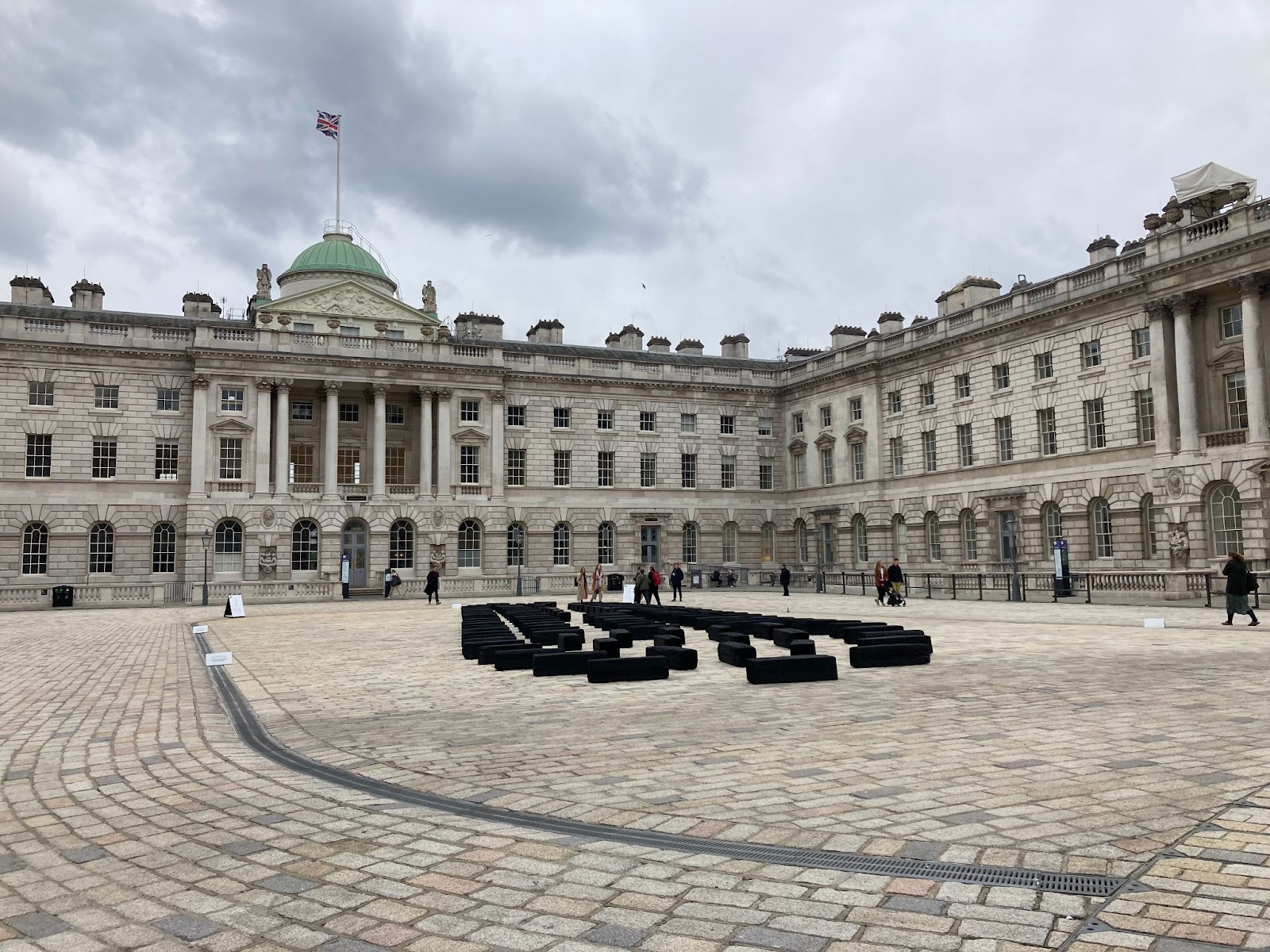


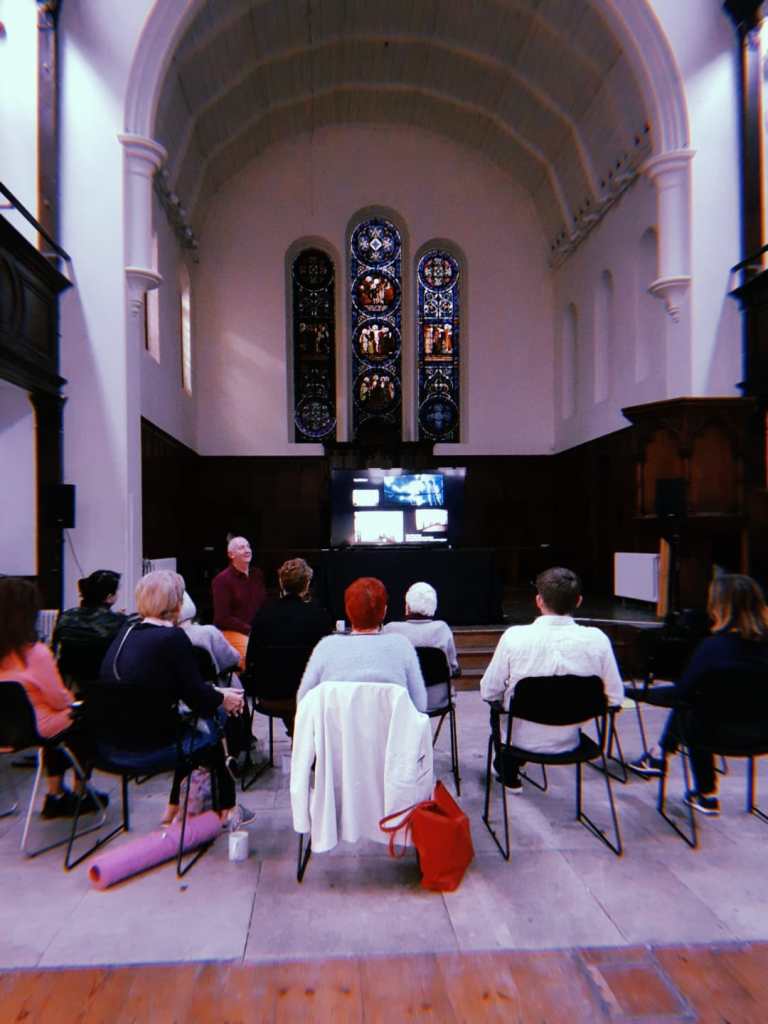




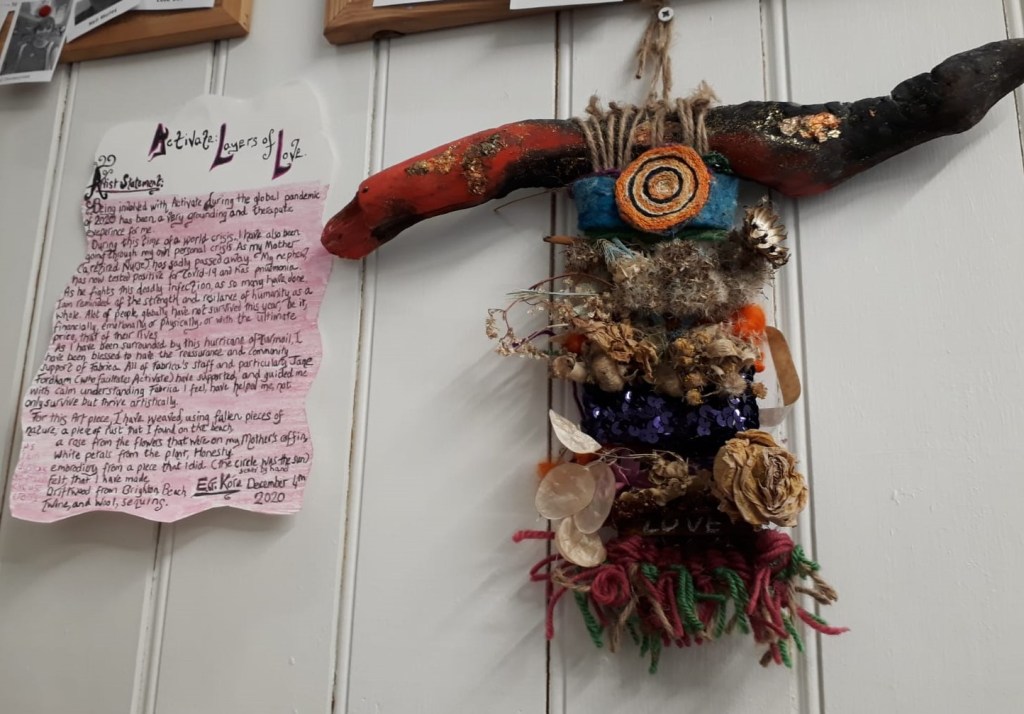




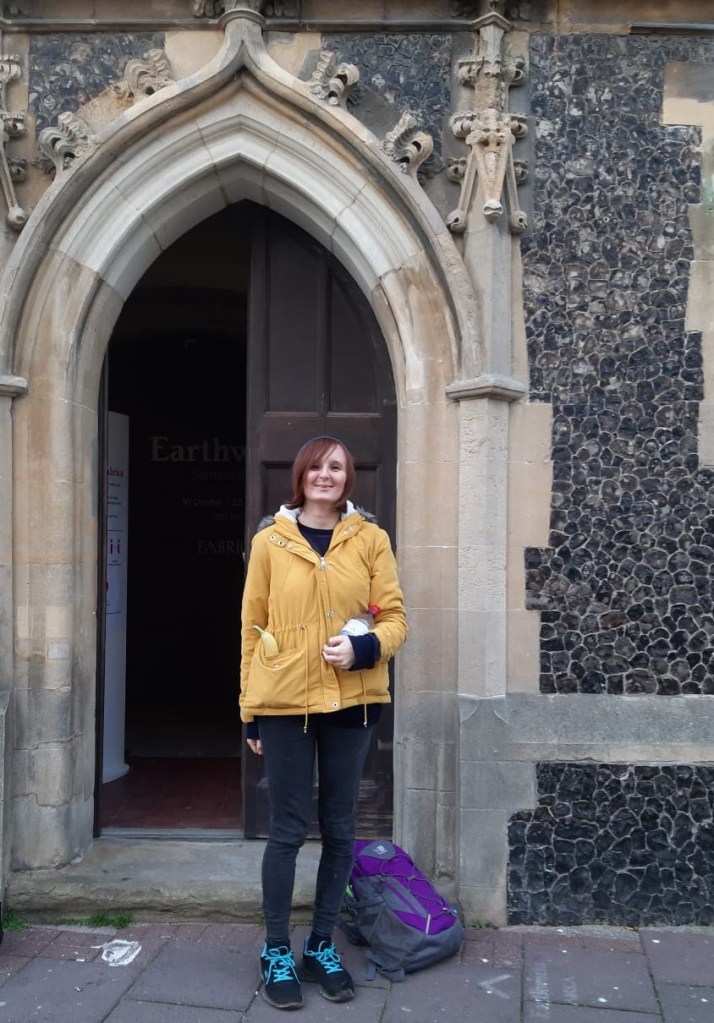
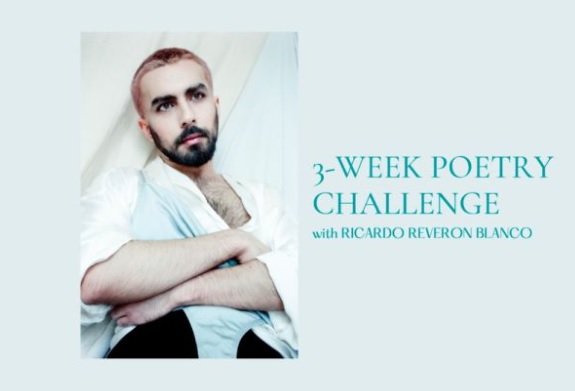


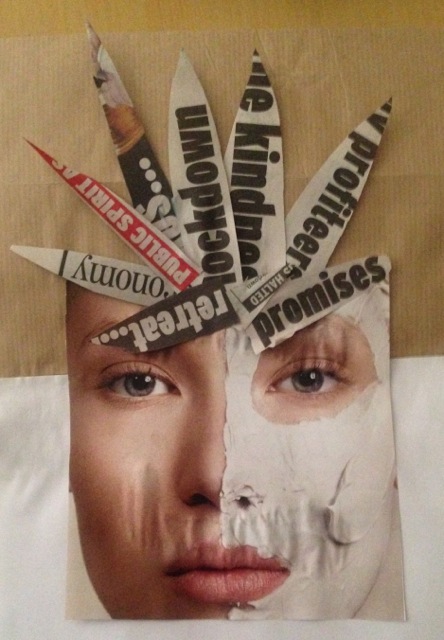


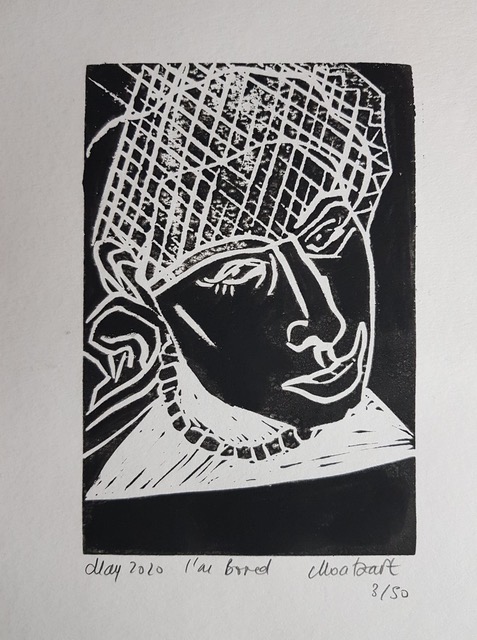


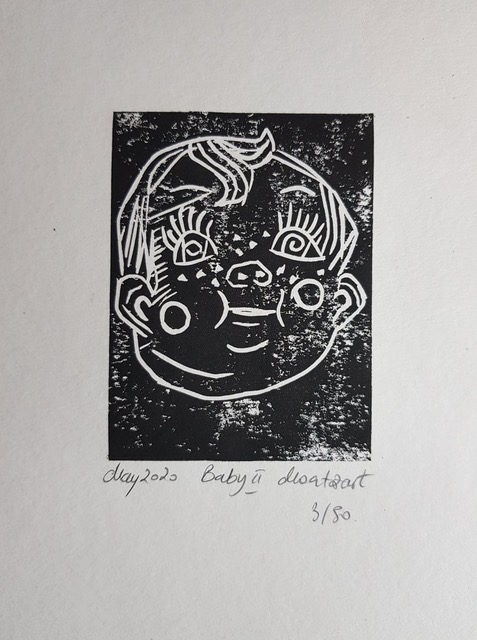


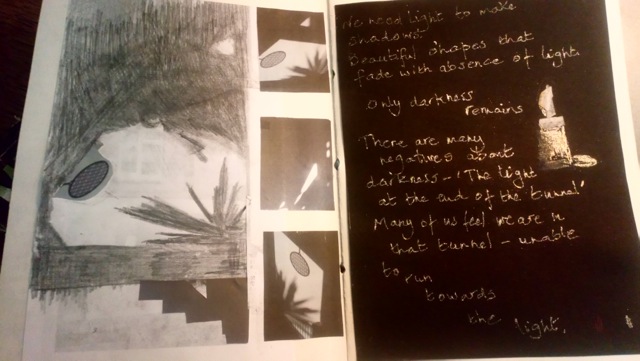


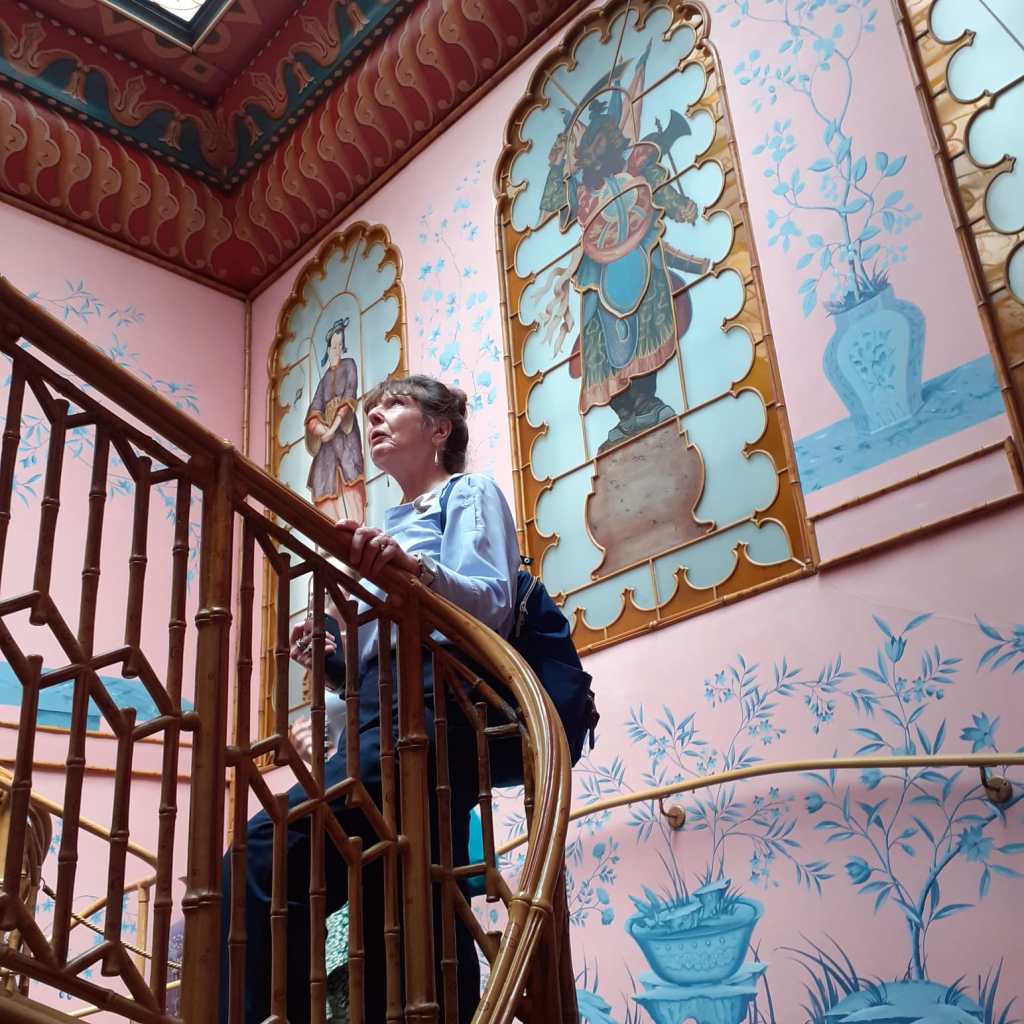

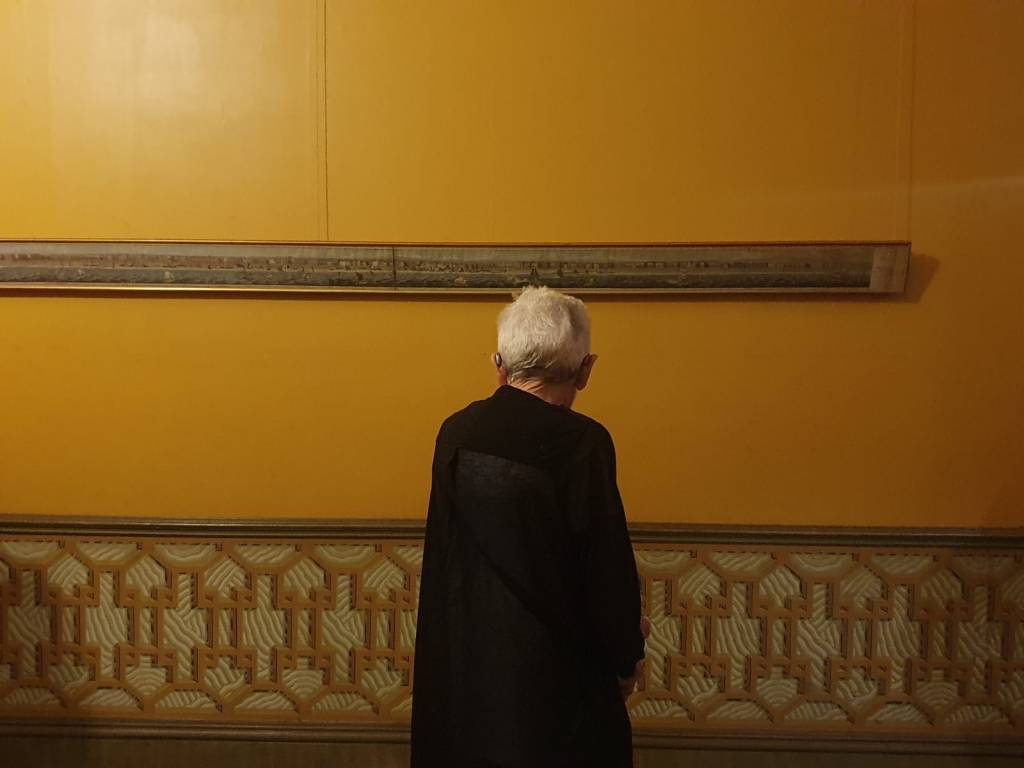

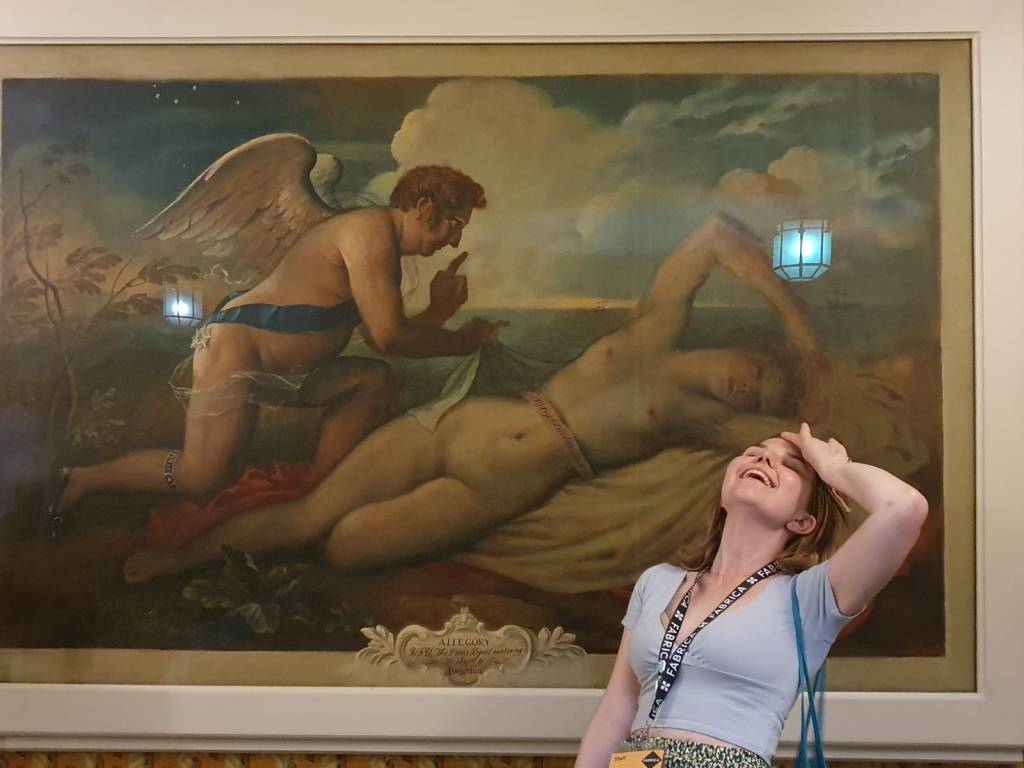

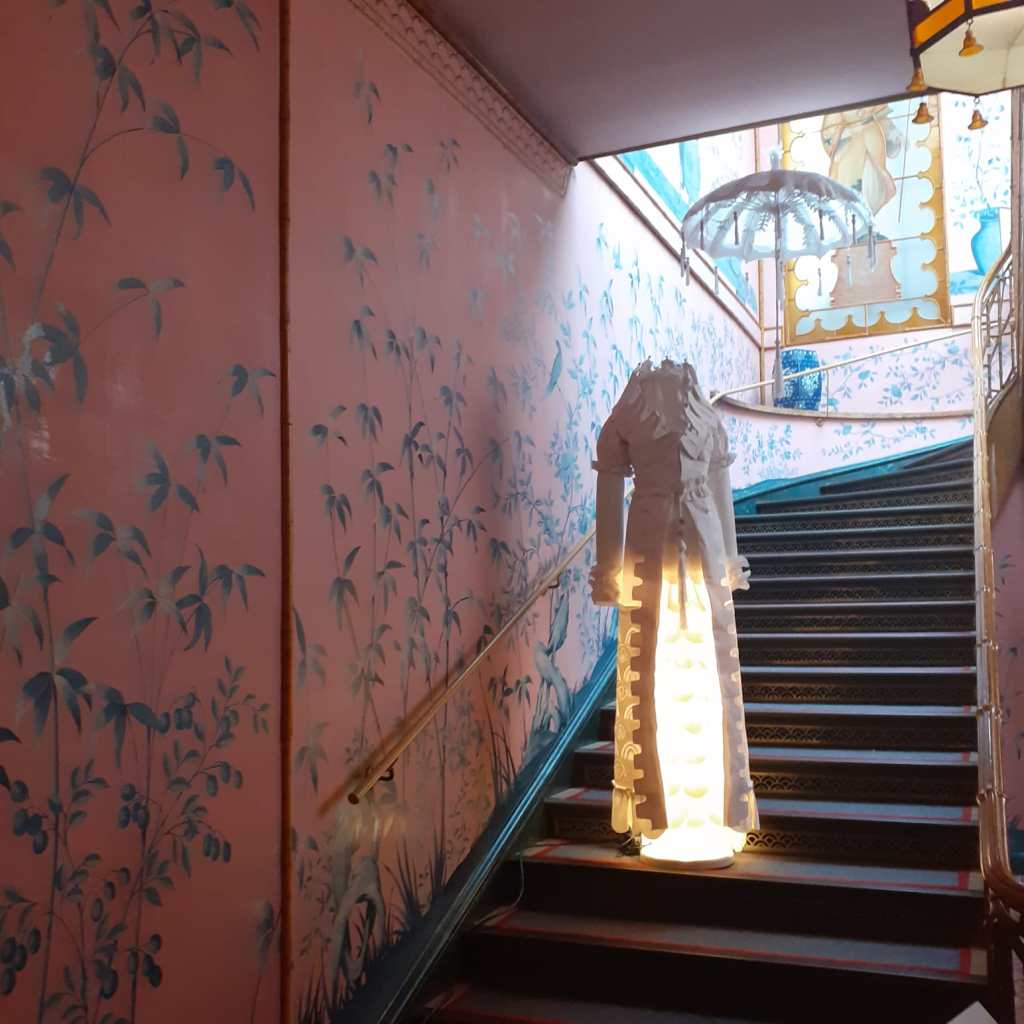


 Fabrica Volunteer Blog